Popular Farmhouse Design Ideas Trending Across Ohio
Farmhouse design ideas are shaping homes across Ohio, from Amish-inspired woodwork to warm neutral palettes and modern rustic kitchens.
Popular Farmhouse Design Ideas Trending Across Ohio
Farmhouse design ideas have become one of the most requested home styles in Ohio, and it’s not hard to see why. Between the state’s deep agricultural roots, its historic barns and dairy farms, and a housing market that spans everything from rural Amish country to fast-growing suburbs outside Columbus and Cincinnati, farmhouse style fits Ohio in a way that feels less like a trend and more like a natural extension of the landscape.
Over the past decade, the look popularized by shows like Fixer Upper introduced a lot of homeowners to shiplap walls, barn doors, and black-and-white contrast. That version of farmhouse design is still around, but it’s evolving. Builders and interior designers working across Ohio are reporting a shift toward warmer color palettes, more natural materials, and details that feel personal rather than mass-produced. Instead of a look pulled straight from a template, the farmhouse homes going up (and being renovated) across the state right now lean into craftsmanship, texture, and a sense of history, especially in regions with strong Amish and rural building traditions.
This article walks through the farmhouse design ideas currently trending across Ohio, room by room and detail by detail, so whether you’re building new, renovating an older farmhouse, or just updating a suburban home with farmhouse touches, you’ll have a clear, practical picture of what’s actually working right now.
Why Farmhouse Design Fits Ohio So Well
Before getting into specific ideas, it’s worth understanding why this style resonates so strongly across the state. Ohio has one of the largest concentrations of working farms in the country, and regions like Holmes County are home to one of the largest Amish communities in the world, known for exceptional woodworking and handcrafted furniture. That combination of agricultural history and skilled craftsmanship gives Ohio homeowners access to authentic farmhouse materials that many other states simply don’t have as readily available.
- Reclaimed barn wood is genuinely local in much of Ohio, not shipped in from elsewhere.
- Amish-built furniture and cabinetry are widely accessible, especially in and around Holmes, Wayne, and Geauga counties.
- Ohio’s four-season climate suits farmhouse materials like wood siding, stone, and layered textiles, which perform well in both humid summers and cold winters.
1. Warm, Earthy Color Palettes Are Replacing All-White Interiors
For years, farmhouse design across Ohio leaned heavily on stark white walls and cabinetry. That’s shifting fast. The farmhouse design trend now moving through the state favors warmer, more grounded tones.
- Sage green, olive, and deep forest tones are showing up on cabinetry and accent walls.
- Terracotta and warm clay tones are being layered into textiles, tile, and accessories.
- Warm whites and soft greiges are replacing the cooler, stark white that defined the style a decade ago.
This shift matters because Ohio’s long winters make cold, stark interiors feel harsher than they might in a warmer climate. A warmer palette holds up better through gray months and pairs naturally with wood tones already common in farmhouse interiors.
2. Reclaimed and Locally Sourced Wood
Wood has always been central to farmhouse style, but Ohio homeowners have an advantage most states don’t: easy access to genuinely reclaimed, locally sourced material.
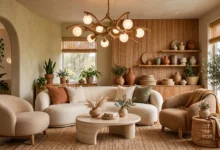
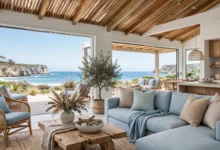
- Barn wood salvaged from decommissioned Ohio farm structures is used for accent walls, beams, and furniture.
- Amish sawmills throughout the state supply solid wood for flooring, trim, and custom cabinetry.
- White oak, a species especially common in Ohio forests, is increasingly favored for flooring and furniture over the more generic options used nationally.
Choosing regionally sourced wood isn’t just an aesthetic choice. It supports local sawmills and craftsmen, and it tends to hold up better since it’s suited to the state’s humidity and temperature swings.
Where to See This in Practice
Many Ohio home tours and builder showcases highlight reclaimed wood as a signature feature, particularly in kitchens and great rooms where a single accent wall or ceiling beam can anchor the entire design.
3. Amish-Crafted Furniture and Cabinetry
One of the most distinctly Ohio elements of the current farmhouse design movement is the widespread use of Amish-built furniture. Unlike mass-produced farmhouse furniture sold nationally, Amish craftsmanship offers solid wood construction, traditional joinery, and a level of durability that fits the farmhouse aesthetic honestly, rather than imitating it.
- Solid wood dining tables and benches remain some of the most requested pieces.
- Custom kitchen cabinetry built by Amish woodworkers is common in both new builds and renovations.
- Hand-forged hardware, like iron drawer pulls and hinges, complements the matte black finishes popular in modern farmhouse kitchens.
Communities in Holmes County, Ohio, often described as the heart of the world’s largest Amish settlement, remain a major source for this kind of authentic, handcrafted farmhouse furniture, and many Ohio homeowners make it a point to source pieces directly from local shops rather than big-box retailers.
4. Softer, More Curved Silhouettes
Farmhouse design nationally is moving away from the sharp, boxy lines that defined the style’s early years, and Ohio homes are following that shift.
- Arched doorways and rounded mirrors are replacing strictly rectangular shapes.
- Oval and round dining and coffee tables are appearing more frequently in farmhouse living spaces.
- Curved range hoods and softened cabinet edges are showing up in farmhouse kitchen remodels.
This softer approach keeps the warmth of traditional farmhouse style while avoiding the overly rigid, almost industrial look that became common during the style’s peak popularity.
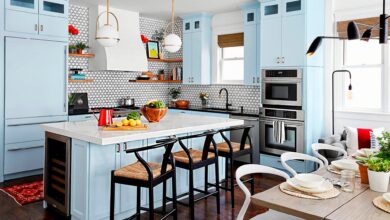
5. Statement Kitchen Islands
The kitchen remains the room where farmhouse style is most visible, and the island has become the centerpiece of that design across Ohio homes.
- Butcher block and honed stone countertops are both popular island surfaces, often paired within the same kitchen for contrast.
- Farmhouse sinks, still one of the most requested features, are frequently built directly into the island rather than the perimeter counter.
- Barstools in reclaimed wood or matte black metal are used to create casual seating for everyday meals.
Numbered list of common island upgrades homeowners are requesting:
- Extended overhangs for two to four barstools.
- Open shelving underneath for displaying cookbooks, crockery, or baskets.
- Built-in wine storage or a beverage station.
- Pendant lighting in warm brass or matte black directly above the island.
- A secondary prep sink separate from the main farmhouse sink.
6. Matte Black and Aged Brass Hardware
Hardware is one of the easiest, most affordable ways homeowners across Ohio are updating farmhouse interiors without a full renovation.
- Matte black faucets, cabinet pulls, and light fixtures continue to unify farmhouse kitchens and bathrooms.
- Aged or warm brass is increasingly used alongside black for contrast, rather than sticking to a single metal throughout.
- Door hardware, hinges, and even light switch covers are being swapped out as a low-cost way to modernize older farmhouse-style homes.
This is one of the most accessible entry points for renters or homeowners not ready for a full remodel, since hardware updates can often be done in a weekend.
7. Shiplap Used Selectively, Not Everywhere
Shiplap became almost synonymous with farmhouse style over the last decade, and Ohio homes saw plenty of it. That’s changing. The current trend treats shiplap as an accent rather than a default wall treatment.
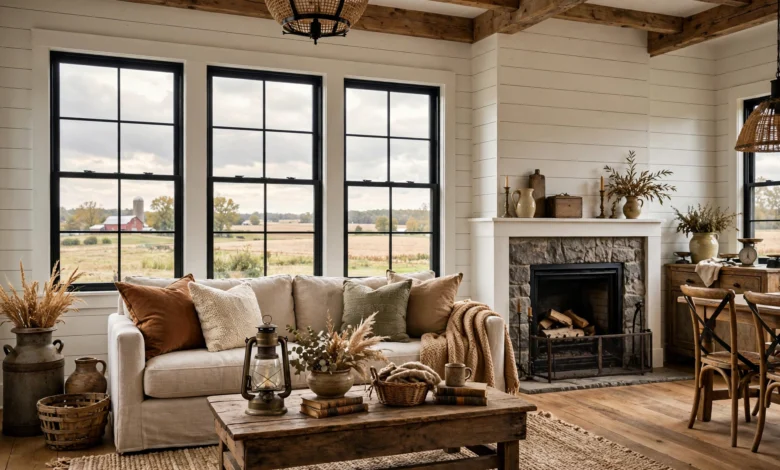
- A single shiplap accent wall behind a bed or fireplace reads as intentional.
- Running shiplap across every wall in a room is now considered dated by most Ohio designers and builders.
- Shiplap is increasingly paired with other textures, like wood beams or plaster, rather than used alone.
8. Layered Textiles for Ohio’s Changing Seasons
Ohio’s climate genuinely shifts from humid summers to cold, gray winters, and farmhouse interiors across the state are designed with that in mind.
- Wool and jute rugs add warmth underfoot during colder months without feeling heavy in summer.
- Linen curtains and slipcovers keep rooms feeling light and breathable through humid stretches.
- Chunky knit throws and layered pillows in mustard, rust, and olive tones add seasonal warmth to living rooms and bedrooms.
This kind of seasonal layering is practical as much as it is stylish, since Ohio homes genuinely need to function differently depending on the time of year.
9. Black Metal Accents as a Unifying Thread
Beyond hardware, black metal is being used more broadly as a design thread that ties different rooms together throughout a farmhouse-style home.
- Window frames and interior doors in matte black steel are appearing in newer Ohio farmhouse builds.
- Black metal stair railings and light fixtures are common in two-story farmhouse designs.
- Exterior black metal roofing and trim are increasingly paired with board-and-batten siding.
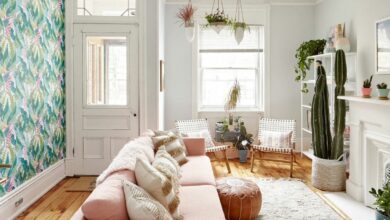
10. Indoor Greenery and Natural Textures
Plants and natural materials continue to play a major role in farmhouse interiors, softening what could otherwise feel like a very hard-surfaced style.
- Large potted plants, like fiddle leaf figs or olive trees, are common focal points in farmhouse living rooms.
- Dried florals and grasses in ceramic or stoneware vases are replacing some of the more literal farmhouse decor, like rooster motifs, from the style’s earlier phase.
- Woven baskets remain a practical and visually warm storage solution across kitchens, mudrooms, and living rooms.
11. Personal, Collected Interiors Over Matching Sets
Perhaps the biggest shift in farmhouse design, both nationally and across Ohio, is a move away from perfectly matched decor toward interiors that feel collected over time.
- Mixing vintage or antique pieces with newer furniture is increasingly common rather than buying a full matching farmhouse set.
- Family heirlooms, especially furniture with a real history, are being incorporated intentionally rather than replaced.
- Art and accessories are chosen for personal meaning rather than strictly matching a color scheme.
This approach fits Ohio particularly well, given how many homes in the state genuinely are older farmhouses with real history, rather than new construction trying to imitate one.
12. Modern Farmhouse Exteriors With Board-and-Batten Siding
The trend isn’t limited to interiors. Ohio’s exterior farmhouse aesthetic has shifted too, particularly for new builds in suburban and exurban developments outside major cities.
- Board-and-batten siding, often in warm white, sage, or navy, has become a defining exterior feature.
- Standing seam metal roofing is frequently paired with siding for a more contemporary farmhouse silhouette.
- Covered front porches with simple, sturdy railings remain a near-universal feature, reflecting the state’s older farmhouse architecture.
13. Sustainability and Craftsmanship Over Fast Furniture
Finally, there’s a broader shift happening within farmhouse design that’s especially visible in a state with strong woodworking traditions like Ohio: a move toward furniture and materials built to last, rather than replaced every few years.
- Solid wood furniture, often locally built, is being chosen over particleboard or laminate alternatives.
- Homeowners are increasingly willing to pay more upfront for pieces expected to last decades rather than a single design cycle.
- Local sourcing, from Amish furniture makers to Ohio sawmills, supports this shift both practically and economically.
According to broader industry coverage of the style, this move toward craftsmanship and longevity is one of the defining characteristics of where modern farmhouse design is headed nationally, and Ohio’s access to skilled local builders puts the state in a strong position to lead that shift rather than simply follow it.
How to Bring These Farmhouse Design Ideas Into Your Own Ohio Home
If you’re planning a renovation or new build, you don’t need to apply every trend at once. Most Ohio homeowners are finding success by choosing a handful of elements that fit their existing home and budget.
- Start with hardware and lighting if you’re working with a smaller budget; these updates are affordable and make an immediate visual difference.
- Invest in one or two statement pieces, like a solid wood dining table or a custom island, rather than spreading a budget thin across many small purchases.
- Source locally where possible. Between Amish woodworkers, Ohio sawmills, and regional furniture makers, the state offers more authentic farmhouse materials than most homeowners realize.
- Layer textiles seasonally rather than decorating once and leaving it static; Ohio’s climate genuinely benefits from this approach.
Conclusion
Farmhouse design ideas continue to evolve, and the version trending across Ohio right now looks noticeably different from the stark, all-white, heavily shiplapped style that defined the look a decade ago. Warmer color palettes, reclaimed and locally sourced wood, Amish-crafted furniture, softer silhouettes, and a genuine emphasis on craftsmanship over mass production are shaping homes from rural farmhouses to new suburban builds across the state. Because Ohio has such strong access to authentic materials and skilled local builders, homeowners here are especially well positioned to bring these trends into their own homes in a way that feels genuine rather than imitative, whether that means a full renovation or a handful of thoughtful updates room by room.