10 Living Room Lighting Ideas to Brighten Any Space
Living room lighting ideas that mix ambient, task, and accent light to warm up your space, cut glare, and make every corner useful.
10 Living Room Lighting Ideas to Brighten Any Space
Living room lighting ideas are usually the fastest way to change how a room feels, and most people don’t reach for them until everything else has already been decided. You’ve picked the sofa, the rug, maybe even repainted a wall, and the room still feels a little flat or a little harsh depending on the time of day. That’s almost always a lighting problem, not a furniture problem.
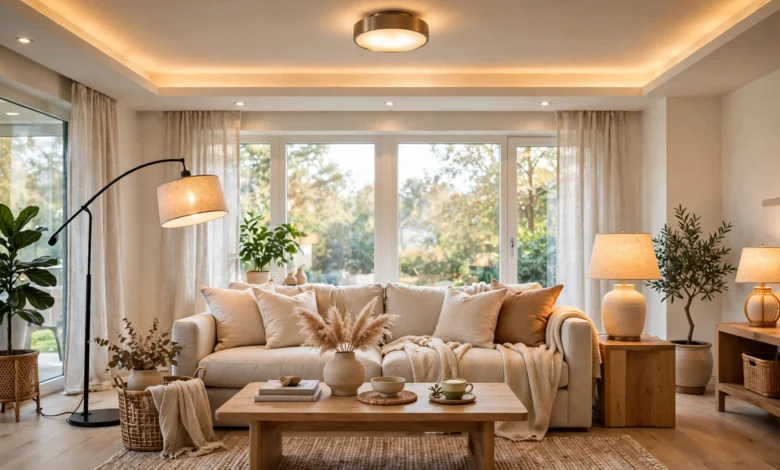
A single overhead fixture can’t do the job on its own. It flattens the room, throws hard shadows under furniture, and leaves corners dark no matter how bright the bulb is. Good living room lighting works in layers: general light to fill the space, task light for reading or working, and accent light to pull focus toward art, shelves, or a favorite chair. When those three layers work together, the room adjusts easily from a bright afternoon hangout to a dim, relaxed evening without you touching a single piece of furniture.
This guide walks through ten practical lighting ideas for living rooms of almost any size or style, from layout basics to specific fixture types worth considering. Some of these are weekend projects, others are a single lamp purchase away. Either way, you’ll come away with a clearer sense of what your room is actually missing.
1. Start With Layered Lighting, Not a Single Fixture
Before picking out fixtures, it helps to understand the concept interior designers rely on most: layering. This is the foundation of nearly every well-lit living room you’ve admired in a magazine or on Pinterest, and it’s simpler than it sounds.
There are three layers to think about:
- Ambient lighting – the general, even light that fills the whole room, usually from ceiling fixtures or recessed cans
- Task lighting – focused light for specific activities like reading, working on a laptop, or doing a puzzle
- Accent lighting – light aimed at something specific, like artwork, a bookshelf, or an architectural feature
A room that relies only on ambient light tends to feel sterile, like an office. A room that leans too hard on accent lighting can feel dim and hard to move around in safely. The U.S. Department of Energy’s guidance on residential lighting design notes that combining these layers, rather than relying on one bright source, both improves comfort and cuts down on wasted energy, since you’re not running one oversized fixture to compensate for everything else.
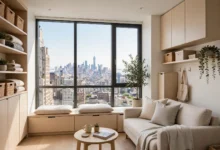
A practical way to test your current setup: turn on only your main ceiling light and walk around the room. If any area feels dim, awkward, or shadowed, that’s where the next layer needs to go.
2. Add a Statement Chandelier or Pendant for Ambient Light
If your living room currently relies on a single flush-mount fixture or, worse, no ceiling light at all, a chandelier or pendant is one of the highest-impact upgrades you can make. It’s the anchor piece that sets the tone for the whole room before anyone even notices the lamps or sconces.
A few sizing basics that make a real difference:
- Measure the room in feet, add the length and width together, and use that number in inches as a rough fixture diameter guide (a 12×16 room suggests a fixture around 28 inches wide)
- Hang the fixture roughly 30-36 inches above a coffee table if it’s centered over one, or 7 feet from the floor if it’s just providing general light
- Choose a finish that contrasts slightly with your ceiling color so the fixture reads as a design choice, not an afterthought
Chandeliers aren’t just for dining rooms. In an open-concept space, a pendant or small chandelier over the seating area helps visually define the living room as its own zone, even without walls.
3. Layer in Floor Lamps for Flexible, Movable Light
Floor lamps are probably the most underrated tool in living room lighting. They don’t require an electrician, they’re easy to move if you rearrange furniture, and they fill in the gaps that overhead lighting always leaves, especially in corners and behind seating.
A few ways to use them well:
- Arc floor lamps work well positioned behind or beside a sofa, casting light down onto a reading spot without a side table taking up floor space
- Tripod floor lamps with a warm-toned shade add ambient light to a corner that would otherwise stay dark
- Torchiere-style lamps bounce light off the ceiling for soft, indirect illumination, which is especially useful in rooms with low or sloped ceilings
If you only make one change from this list, a good floor lamp near your main seating area is usually the one with the most noticeable payoff for the least effort.
4. Use Table Lamps to Warm Up Seating Areas
Table lamps do double duty: they provide close, usable light for reading or working, and their warm glow softens a room in a way overhead lighting rarely can. A pair of matching lamps on either end of a sofa, or one on a side table next to an armchair, instantly makes a space feel more finished.
A few things worth paying attention to when choosing table lamps:
- Shade material changes how the light spreads. Linen and fabric shades diffuse light softly, while glass or metal shades throw more direct, focused light
- Lamp height matters more than people expect. The bottom of the shade should generally sit at eye level when you’re seated nearby, so the bulb itself isn’t visible and glaring
- Base weight and shape should feel proportional to the table it’s sitting on, not overwhelming a small side table or getting lost on a large one
Table lamps are also one of the easiest ways to introduce texture and color into a room without repainting or reupholstering anything.
5. Install Wall Sconces to Free Up Surface Space
Wall sconces solve a specific problem: they add usable, ambient light without taking up any table or floor space, which matters a lot in smaller living rooms or rooms with limited furniture footprint.
Sconces work particularly well:
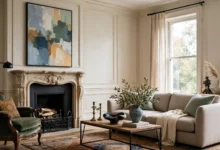
- Flanking a fireplace, where they balance the visual weight of the mantel
- Along a wall with artwork, positioned to wash light evenly across the piece
- In narrow rooms where floor lamps and side tables would eat up too much walking space
Plug-in sconces have made this option far more accessible than it used to be, since they don’t require hardwiring into the wall. If you’re renting or hesitant about electrical work, a plug-in version with a cord cover gives you the same visual effect without the installation hassle.
6. Add Accent Lighting to Highlight Art and Shelving
Accent lighting is the layer most living rooms skip entirely, and it’s often the one that makes a space feel professionally designed. This is about directing light toward something specific rather than lighting the whole room evenly.
Some straightforward ways to bring in accent lighting:
- Picture lights mounted directly above framed art, aimed downward to highlight the piece without glare
- LED strip lighting tucked behind a bookshelf, TV console, or floating shelf, which adds a soft glow without any visible fixture
- Puck lights inside a china cabinet or display case to make collected objects stand out at night
A little accent lighting goes a long way. Even one well-placed picture light can shift the entire feel of a wall from flat to intentional.
7. Use Dimmers to Control Mood Instantly
If there’s one upgrade worth prioritizing above almost everything else on this list, it’s adding dimmer switches to your main living room lighting. A room that’s bright enough for cleaning or hosting during the day rarely needs to stay that bright once the sun goes down, and dimmers let you adjust without swapping bulbs or turning off half your fixtures.
Dimmers are worth pairing with:
- Overhead fixtures, so the general ambient layer can shift from bright and functional to soft and relaxed
- Smart bulbs, which often include dimming and color-temperature adjustment through an app, letting you save specific settings for movie nights or reading
- Plug-in dimmer modules, a good option for floor and table lamps if you’d rather not rewire a wall switch
According to lighting guidance from the National Kitchen and Bath Association’s lighting standards, dimming capability is now considered a baseline expectation in well-designed living spaces, not a luxury add-on, largely because it lets one fixture serve multiple purposes throughout the day.
8. Choose the Right Bulb Color Temperature
Fixtures get most of the attention, but the bulbs inside them matter just as much. Color temperature, measured in Kelvin, determines whether a room feels warm and cozy or bright and clinical, and mismatched temperatures across fixtures in the same room are a common, easy-to-fix mistake.
A quick reference for living room spaces:
- 2700K-3000K (soft white/warm white): the standard choice for most living rooms, giving a cozy, relaxed glow
- 3500K-4000K (neutral white): works better in living rooms that double as workspaces or need brighter task lighting
- 5000K and above (daylight): generally too clinical for a living room, better suited to kitchens, garages, or bathrooms
Sticking to one color temperature across all your fixtures, rather than mixing warm lamps with cool overhead bulbs, keeps the room feeling cohesive instead of patchy.
9. Bring In Natural Light During the Day
Artificial fixtures matter most after sunset, but daytime lighting deserves attention too. Making the most of natural light reduces how much you rely on lamps and fixtures during the day and tends to make a room feel larger and more open.
A few low-cost ways to maximize daylight:
- Swap heavy curtains for sheer or light-filtering panels that still offer privacy without blocking light
- Position mirrors across from windows to bounce daylight deeper into the room
- Keep furniture, especially tall pieces, away from windows so light isn’t blocked before it reaches the rest of the space
Even in rooms with limited window space, these small adjustments make a noticeable difference in how bright the room feels by midday.
10. Mix Fixture Styles for a Layered, Collected Look
The last of these living room lighting ideas is more about aesthetics than function: don’t feel locked into one fixture style throughout the room. A brass floor lamp, a linen-shade table lamp, and a black metal sconce can absolutely coexist, as long as there’s some thread tying them together, whether that’s a shared metal finish, a similar shade color, or a consistent color temperature.
A collected, slightly mixed look tends to feel more intentional and lived-in than a matching three-piece lamp set bought all at once. If you’re unsure where to start, pick one finish (brass, black, or brushed nickel) and let that repeat across two or three fixtures, then feel free to vary everything else.
Frequently Asked Questions
How many lumens does a living room need? Most living rooms need somewhere between 1,500 and 3,000 lumens of ambient light total, depending on room size, plus additional task lighting near reading or work areas.
Should living room lighting be warm or cool? Warm white (2700K-3000K) is generally the better fit for a living room, since it creates a relaxed, inviting feel rather than the brighter, more clinical tone of cooler bulbs.
Do I need an electrician to add sconces or a chandelier? Hardwired fixtures typically require an electrician unless you’re replacing an existing fixture on the same wiring. Plug-in sconces and lamps are a straightforward alternative if you’d rather skip the wiring work.
Conclusion
Getting living room lighting right isn’t about buying one perfect fixture, it’s about layering ambient, task, and accent light so the room can adapt to whatever you’re using it for, whether that’s a bright afternoon with the kids or a quiet evening with a book. Start with the layer your room is missing most, whether that’s a floor lamp in a dark corner, a dimmer on the overhead light, or a picture light over your favorite piece of art, and build from there. Small, targeted changes usually make a bigger difference than one expensive overhaul, and you don’t need to tackle all ten ideas at once to notice your living room feel warmer, brighter, and more finish.