How to Design a Living Room That Works for Family and Guests
How to design a living room that handles daily family life and hosting guests, without compromising on either one.
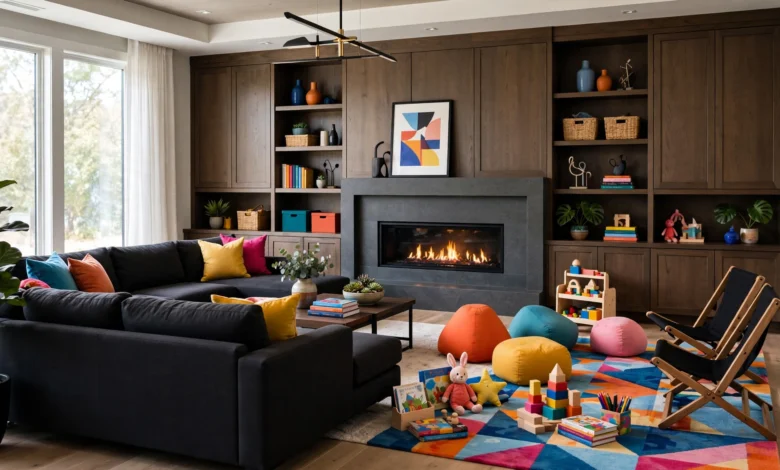
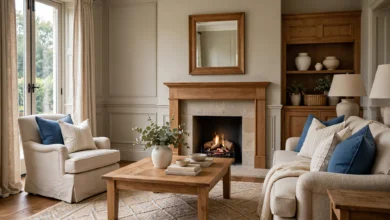
How to design a living room that satisfies both everyday family life and the occasional dinner party is one of the more common design problems people run into. It’s easy to find a room that leans hard in one direction: a stiff, formal setup that looks great in photos but nobody actually wants to sit in, or a lived-in family space that feels too casual and cluttered the moment guests show up. Neither one is doing its job properly.
The room that actually works is the one that doesn’t force you to choose. Kids can sprawl out with toys on a Tuesday afternoon, and the same space can host a group of friends on Saturday night without a frantic cleanup beforehand. Getting there isn’t about buying two sets of furniture or keeping a “good room” that’s off-limits most of the year. It comes down to a handful of decisions around layout, materials, storage, and lighting that quietly do double duty.
This guide walks through 12 practical steps for how to design a living room that flexes between family use and entertaining without feeling like a compromise on either side. Some of these are furniture and material choices, others are about how you plan the layout and flow of the space itself. Together, they cover the full picture: a room built for how you actually live, not just how you want it to look when someone’s coming over.
1. Start With How the Room Is Actually Used
Before choosing a single piece of furniture, map out what the room needs to handle in a typical week. Movie nights, homework, playtime, casual guests, the occasional larger gathering, each of these puts different demands on the space. Writing this down first keeps you from designing around a Pinterest photo instead of your actual routine.
- List the three or four activities the room sees most often
- Note anything that happens rarely but still needs space, like holiday hosting
- Identify pain points in your current setup before changing anything
2. Choose a Flexible Seating Layout
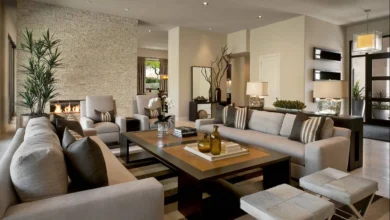
The seating arrangement is what determines whether a room feels welcoming to a group or awkward and disconnected. An L-shaped layout or a sectional with modular pieces tends to work better than two stiff sofas facing off across a coffee table, since it naturally draws people into conversation rather than seating them like they’re at a job interview.
- A sectional with a chaise gives kids a place to stretch out and adults a proper seat when guests arrive
- Floating furniture away from the walls, rather than pushing everything to the perimeter, creates a tighter, more social conversation area
- Include a couple of lightweight chairs or ottomans that can be pulled in when the group grows
3. Invest in Durable, Easy-to-Clean Fabrics
A family-friendly living room has to survive spilled juice, muddy shoes, and the occasional pet incident, and it still needs to look presentable when guests are over. Performance fabrics, the kind designed to resist stains and clean up with water rather than dry cleaning, have improved enough that they no longer look purely utilitarian.
- Look for labels like “performance fabric” or “stain-resistant weave” when shopping for sofas
- Slipcovers offer a practical middle ground, since they can be washed or swapped without replacing the whole piece
- Darker or patterned upholstery hides everyday wear better than pale solid colors
4. Build In Storage That Hides Clutter Fast
Nothing undermines a room’s ability to host guests faster than toys, remotes, and blankets scattered everywhere. Smart storage solutions let you clear the room in minutes rather than an hour.
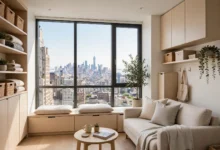
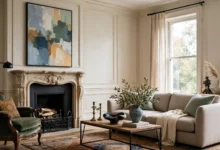
Closed Storage for Speed
Ottomans with hidden interiors, media consoles with cabinet doors, and baskets that tuck under console tables all let you sweep clutter out of sight quickly. Closed storage matters more than open shelving here, since the goal is speed, not display.
Open Storage for Character
A mix works best. Keep a shelf or two open for books, framed photos, or a few personal objects, since a room with zero personality can feel just as uninviting as a cluttered one.
5. Create a Defined Conversation Area
Whether the living room is a standalone space or part of an open-plan layout, a clearly defined conversation area keeps both family time and hosting feeling intentional rather than scattered. A rug large enough for the front legs of the sofa and chairs to sit on helps ground the space and signal where the “room” begins and ends, even without walls.
6. Keep a Neutral Base With Room to Add Personality
Neutral walls and large furniture pieces, sofas, rugs, media units, give you flexibility to update the room’s feel over time without a full renovation. Layer in personality through pillows, art, and accessories instead, since those are far easier and cheaper to swap out as tastes or seasons change.
- Choose neutral tones for big-ticket items that are expensive to replace
- Use pillows, throws, and art to introduce color and pattern
- Rotate smaller decor items seasonally to keep the room feeling current
7. Plan Lighting for Both Everyday Use and Entertaining
A single overhead light rarely covers both scenarios well. Bright, even lighting suits homework and cleanup, while warmer, dimmer lighting sets a better mood for guests in the evening. Installing a dimmer switch, or layering in floor and table lamps alongside the main fixture, gives you control over both without needing to redesign the lighting plan for different occasions.
8. Make Room for an Activity Corner
If the living room doubles as a family space, carving out even a small corner for kids’ activities, a low table, a basket of toys, a reading nook, keeps that function contained rather than spreading across the whole room. According to HGTV’s design team, incorporating flat surfaces at kid height and closed storage underneath open shelving is one of the most effective ways to keep a family room functional without sacrificing style.
9. Choose Furniture With Rounded, Safer Edges
If young children are part of the household, furniture with sharp corners, particularly coffee tables, becomes a real safety concern during active play. Rounded or curved furniture edges soften the room visually while also reducing the risk of bumps and bruises, a detail that matters for family use but doesn’t compromise the room’s appeal to guests.
10. Coordinate the Living Room With Adjacent Spaces
In open-plan homes especially, a living room that feels disconnected from the kitchen or dining area next to it can make the whole floor feel choppy. Matching wood tones, keeping a consistent color palette, and repeating a material or finish across adjoining spaces ties the rooms together, which matters both for daily flow and for how the space reads when guests are moving between rooms during a gathering.
11. Add Flexible, Movable Seating for Larger Groups
Even a well-planned permanent seating layout can run short when a bigger group shows up. Lightweight stools, poufs, or floor cushions that can be tucked away in a corner or closet and pulled out as needed let the room expand for entertaining without permanently taking up floor space the rest of the time.
12. Prioritise Comfort Above All Else
It’s easy to get pulled toward furniture that photographs well but isn’t actually comfortable to sit in for an hour. A family and guest living room has to earn its keep every single day, not just look good in a listing photo. The National Kitchen and Bath Association and similar design bodies consistently point to comfort and everyday usability as the top predictors of whether a living room actually gets used, over purely aesthetic choices. If a sofa isn’t comfortable enough for a lazy Sunday, it won’t magically become the right choice for a dinner party either.
Frequently Asked Questions
How do I make a living room work for both kids and adult guests? Focus on flexible seating, durable fabrics, and fast-access storage so the room can transition from playtime to hosting mode in minutes rather than requiring a full reset.
Is a formal living room still worth having? For most households, a single flexible space that handles both family life and entertaining is more practical than maintaining a separate formal room that sits unused most of the year.
What’s the most important element to get right first? Layout and seating arrangement. Everything else, color, storage, lighting, builds around a layout that either supports conversation and movement or works against it.
Conclusion
Learning how to design a living room that genuinely works for both family life and guests comes down to a series of small, practical decisions rather than one big overhaul. A flexible seating layout, durable materials, fast storage solutions, and lighting that adjusts to the moment let one room handle everything from a chaotic Tuesday afternoon to a Saturday night with friends. The goal isn’t a room that looks perfect and gets used sparingly, it’s a space that holds up to daily life and still feels ready the moment someone knocks on the door.