How to Mix Modern and Traditional Styles in Your Living Room
How to mix modern and traditional styles in a living room using balance, texture, and scale, with practical steps for a lived-in result.
8 Proven Ways to Mix Modern and Traditional Styles in Your Living Room
How to mix modern and traditional styles is one of those design questions that sounds simple until you actually try it. Push too far in one direction and the room ends up looking either cold and showroom-like or fussy and dated. The rooms that get this right, the ones that feel collected, personal, and genuinely lived-in, aren’t following one rulebook. They’re borrowing from two, and knowing which pieces to take from each.
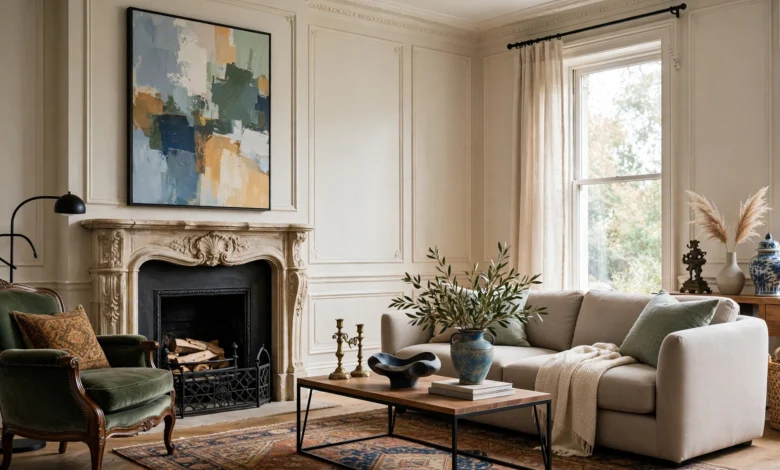
This blended approach has a name in the design world: transitional style. It sits deliberately between traditional decor’s warmth, curves, and detail, and modern decor’s clean lines and restraint. Done well, it lets you keep a family heirloom sideboard without the room feeling like a period piece, or bring in a sleek new sofa without losing the warmth your traditional rug and lighting already give the space.
The tricky part isn’t finding pieces you like from each style. Most people can do that. It’s making them sit together in one room without a visible seam, where the eye doesn’t immediately sort furniture into “old” and “new” piles. That takes a bit of structure: a shared color palette, consistent scale, and a few connecting details that tie everything together.
This guide breaks down eight practical ways to mix modern and traditional styles in a living room, covering furniture, color, texture, and the small details that either make a blended room feel intentional or leave it looking like two different rooms got pushed together by accident.
1. Start With a Neutral Base Palette
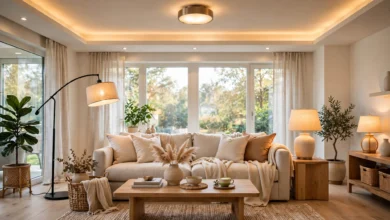
The fastest way to make modern and traditional pieces clash is to let each one bring its own strong color statement into the room. The fix most designers reach for first is a neutral base that lets both styles share the same visual language.
A few starting points that work well:
- Warm whites, greige, or soft taupe on walls give both a traditional wingback chair and a modern low-profile sofa the same backdrop to sit against
- A neutral rug (wool, jute, or a subtle pattern in tonal colors) grounds the room without pulling focus toward one style over the other
- Layered neutrals in different textures, rather than one flat shade repeated everywhere, keep the palette from feeling boring once the color has been simplified
Once the base is neutral, color can come back in through cushions, art, or a single accent chair, which is a much easier way to control how bold the room feels without recommitting to a full repaint if the look doesn’t land.
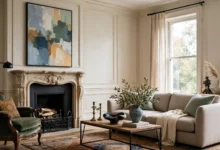
2. Pair Clean-Lined Furniture With One Ornate Piece
A living room that mixes modern and traditional styles well usually has a clear majority style with one or two pieces pulling from the opposite direction, rather than a 50/50 split throughout. A room split evenly down the middle tends to feel indecisive instead of curated.
A workable formula:
- Choose your dominant style first, whether that’s a streamlined modern sofa or a traditional roll-arm sofa
- Add one or two contrasting pieces with real presence, like a carved wood coffee table in an otherwise modern room, or a sculptural modern floor lamp in an otherwise traditional one
- Keep everything else, side tables, occasional chairs, in a more neutral, in-between style that doesn’t compete with either statement piece
This is close to what interior designers mean when they talk about transitional design: not an even blend, but one style setting the tone with the other used sparingly for contrast.
3. Match Undertones, Not Styles
One detail that trips people up: two pieces of furniture can be from completely different eras and still clash badly if their wood tones or metal finishes don’t match. A traditional oak side table with warm orange undertones will fight with a modern walnut coffee table that leans cooler and greyer, even though both are technically “brown.”
To avoid this:
- Bring a small sample or photo of your key pieces when shopping for anything new, rather than relying on memory
- Stick to one dominant metal finish (brass, black, or brushed nickel) across lighting and hardware, even if the fixtures themselves are a mix of modern and traditional shapes
- Check pieces in natural daylight before committing, since undertones often shift under warm indoor bulbs
Matching undertones is a small, easy-to-miss step, but it does more to make a mixed room feel cohesive than almost any other single decision.
4. Use Texture as the Connecting Thread
Modern design tends to favor smooth, minimal surfaces, glass, polished metal, flat-weave fabric, while traditional design leans into richer texture, like carved wood, tufted upholstery, and heavier fabrics. Rather than treating these as opposites, texture is actually one of the easiest ways to bridge the two.
A few pairings that work particularly well:
- A smooth modern sofa in a bouclé or linen fabric, which softens the clean lines enough to feel at home next to a traditional wingback chair
- A traditional turned-leg side table finished in a matte modern lacquer instead of a classic wood stain
- Sheer or textured linen curtains, which suit both a modern room needing softness and a traditional room needing a lighter touch
The Metropolitan Museum of Art’s overview of design movement history is a useful reminder that most style eras borrowed heavily from the ones before them, so texture-based blending isn’t really cheating the rules, it’s closer to how design has always evolved.
5. Keep Scale Consistent Across Styles
Furniture from different eras is often built at very different scales, and mismatched proportions can undercut an otherwise well-matched color and texture scheme. A delicate antique side table can look out of place next to an oversized modern sectional, not because the styles clash, but because the visual weight doesn’t match.
A quick way to check scale before buying:
- Compare the height and depth of new pieces against what’s already in the room, not just the style or finish
- Pair heavier, larger traditional pieces with modern furniture that has some visual weight too, rather than something delicate or spindly
- If you’re set on mixing a delicate traditional piece into a modern room, give it its own moment (a single accent chair, for example) rather than placing it directly next to bulkier modern furniture
Scale is one of the most overlooked factors in mixed-style rooms, largely because it’s harder to judge from photos than color or finish, which is part of why measuring and mocking up a layout before buying pays off.
6. Layer in Pattern With Restraint
Traditional interiors often carry pattern well, think florals, damask, or classic stripes, while modern interiors tend to strip pattern back to almost nothing. Mixing the two doesn’t mean picking a side; it means using pattern deliberately rather than throughout.
A workable approach:
- Choose one pattern to anchor the room, often on a rug or a set of cushions, rather than spreading multiple patterns across furniture, curtains, and walls
- Pair a patterned traditional textile with solid modern upholstery, so the pattern has room to stand out instead of competing with other prints
- If in doubt, scale the pattern down. A subtle traditional motif tends to blend into a modern room more easily than a bold, large-scale print
This restraint is part of what separates a well-executed transitional room from one that just looks cluttered with too many competing ideas at once.
7. Let Lighting Bridge the Two Styles
Lighting fixtures are one of the more visible style markers in a room, and they’re also one of the easiest places to make a deliberate mixed-style statement without overhauling the whole space.
A few ways to use lighting as a bridge:
- A traditional chandelier with a modern update, like a classic silhouette in matte black rather than ornate brass, works in either a modern or traditional room
- A sculptural modern floor lamp placed beside a traditional armchair adds contrast without overwhelming the seating area
- Table lamps with traditional ceramic bases and simple modern shades (or the reverse) are an easy, low-cost way to blend both styles in one object
Because lighting is relatively easy and affordable to swap compared with large furniture, it’s often the best place to experiment with a mixed-style look before committing to bigger changes elsewhere in the room.
8. Add Personal Pieces That Don’t Fit Either Category
The most convincing mixed-style rooms usually include at least one piece that isn’t really “modern” or “traditional” at all: a family heirloom, a travel find, an inherited rug, or a piece of art bought because it meant something rather than because it matched. These pieces do more to make a room feel genuinely personal than anything bought specifically to complete a look.
A few ways to work these pieces in without letting them clash:
- If a piece carries strong color or pattern, let it be the room’s focal point and keep everything else more neutral around it
- Reupholster or refinish an inherited piece in a more contemporary fabric or finish if the original doesn’t suit the rest of the room
- Give sentimental pieces a clear spot in the room rather than tucking them in a corner, since they tend to read as more intentional when they’re given some visual presence
Rooms built entirely from a single catalog or showroom trip often feel correct but a little impersonal. A few pieces that don’t perfectly fit the plan are usually what make a living room feel like it actually belongs to the people living in it, rather than a display.
Common Mistakes to Avoid When Blending Styles
Even with the right pieces in hand, a few recurring mistakes can undo an otherwise solid plan to mix modern and traditional styles. Knowing what to watch for tends to save both time and money compared with fixing a room after it’s already furnished.
- Buying everything from one collection. A matching modern set or a full traditional suite might photograph well in a showroom, but it rarely reads as intentional once it’s home. Mixed rooms need at least a few pieces sourced separately.
- Treating every element as equally important. Not every lamp, cushion, or side table needs to make a style statement. Giving too many pieces visual weight leaves the eye with nowhere to rest.
- Ignoring the room’s existing architecture. A living room with ornate crown molding and a marble fireplace will always lean slightly traditional no matter how modern the furniture is, and working with that instead of against it tends to produce a more convincing result.
- Ripping out original features too early. Fireplaces, picture rails, and original flooring are often easier and cheaper to work into a mixed scheme than to replace, and they usually add the traditional anchor a modern room needs.
- Rushing the process. The most convincing transitional rooms are rarely finished in one shopping trip. Living with a mostly-modern or mostly-traditional room for a few weeks before adding contrasting pieces makes it much easier to see what the space actually needs.
Design guidance from HGTV’s overview of transitional style makes a similar point: balance is the defining feature of a successful transitional room, and that balance is usually reached gradually, piece by piece, rather than through one complete furniture swap.
Frequently Asked Questions
What’s the difference between transitional and modern farmhouse style? Transitional style blends modern and traditional furniture and finishes in roughly equal measure, while modern farmhouse leans more heavily on rustic, rural details layered over a simpler modern base.
Is it expensive to mix modern and traditional styles? Not necessarily. Many of the easiest changes, like matching undertones, adjusting lighting, or reupholstering an existing piece, cost far less than replacing an entire room’s furniture at once.
How many traditional pieces should a modern living room have? There’s no fixed number, but most well-balanced rooms lean roughly 70/30 or 60/40 toward one dominant style, using the minority style for contrast rather than an even split throughout.
Conclusion
Learning how to mix modern and traditional styles in a living room comes down to a handful of repeatable decisions: a neutral base palette that lets both styles share the same backdrop, one dominant style with the other used for contrast, matched undertones and consistent scale so nothing visually clashes, and texture, pattern, and lighting used deliberately rather than scattered throughout. The rooms that pull this off best usually include a personal piece or two that doesn’t fit neatly into either category, which is often what separates a well-designed room from one that simply feels lived-in and genuinely yours. Start with whichever step feels most achievable, whether that’s repainting to a neutral base or swapping out a single lighting fixture, and build the rest of the mix around it gradually rather than all at once.
Keywords: