18 Bathroom Ideas That Combine Style and Function
Bathroom ideas that balance good looks with everyday practicality, covering layout, storage, lighting, fixtures and materials that actually last.
18 Bathroom Ideas That Combine Style and Function
Bathroom ideas are easy to find and hard to filter. Scroll through any design site for ten minutes and you’ll see hundreds of gorgeous photos, but very few of them tell you whether the room actually works day to day. A bathroom gets used more than almost any other room in the house, often by several people racing to get ready at the same time, so it has to hold up to steam, splashes, and rushed mornings while still looking like a space you’d want to spend time in.
That’s really the balance this article is built around. Every idea here is chosen because it does two jobs at once: it looks intentional, and it solves a real problem, whether that’s a lack of storage, poor lighting, or a layout that doesn’t suit how your household actually uses the room. Some of these are big-ticket changes worth planning into a full renovation, and others are smaller swaps you can make without touching plumbing or tile.
We’ve grouped these bathroom ideas into six categories: layout, storage, lighting, fixtures, materials, and smart or accessible features. You don’t need to tackle all eighteen at once. Pick the ones that address your biggest frustrations first, whether that’s a cramped vanity, a dim mirror, or a shower that never quite dries out between uses, and build from there.
Why Style and Function Both Matter in Bathroom Design
A bathroom that only prioritizes looks tends to fall apart under daily use, quite literally in some cases, when the wrong grout or finish can’t handle constant moisture. A bathroom that only prioritizes function can end up feeling clinical, like a hospital room with better tile. Good bathroom design treats the two as connected rather than competing, choosing materials and layouts that are durable first, then finishing them in a way that feels considered rather than default.
The National Kitchen and Bath Association publishes planning guidelines that many designers use as a baseline for clearances, layout spacing, and safety, and it’s worth a look if you’re planning anything beyond a cosmetic refresh. These standards exist because bathrooms are one of the few rooms where poor planning creates real safety issues, not just an awkward-looking space.
Layout and Space Planning Ideas
Layout is the part of a bathroom most people think about last, but it has the biggest effect on how the room actually feels to use.
1. Separate the Toilet and Sink Where You Can
If space allows, splitting the toilet into its own small enclosed area, sometimes called a lootility or water closet, lets more than one person use the bathroom at once. It’s a small layout change that makes a big difference for busy households in the morning.
2. Widen the Path Around the Vanity
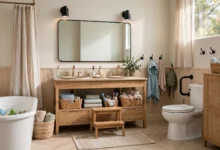
A vanity that’s too close to the door or shower entry makes a bathroom feel smaller than it is, even if the square footage is generous. Aim for at least 30 inches of clear floor space in front of any fixture so the room doesn’t feel like an obstacle course.
3. Consider a Wet Room Layout for Small Bathrooms
In a genuinely tight bathroom, removing the shower tray and tanking the whole floor as a wet room can actually free up more usable space than a standard enclosure, since there’s no threshold or screen frame to work around.
Storage Solutions That Look Good Too
Clutter is the fastest way to undercut an otherwise well-designed bathroom, so smart storage deserves just as much attention as tile choice.
4. Recessed Niches Instead of Bulky Shelving
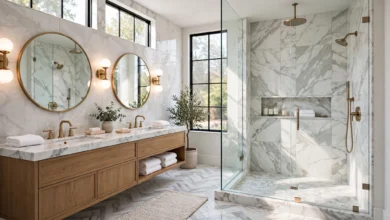
Building a recessed niche into a stud or shower wall keeps shampoo bottles and soap out of the way without adding visual bulk. It’s one of the most requested bathroom ideas in new shower installations because it looks built-in rather than bolted on.
5. Furniture-Style Vanities with Real Storage
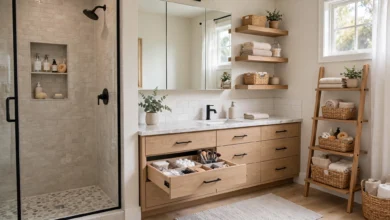
A floating vanity with proper drawers, rather than a pedestal sink with no storage at all, gives you somewhere to put everyday items out of sight. Soft-close drawers and a shallow tray insert for smaller items keep things organized without extra effort.
6. Vertical Storage for Narrow Bathrooms
In a narrow bathroom, a tall, slim cabinet next to the toilet or vanity uses vertical space that would otherwise sit empty. It’s a straightforward fix for households that need more storage but don’t have the floor space for a traditional cabinet.
Lighting Ideas That Work as Hard as They Look
Lighting affects how a bathroom feels more than almost any other single choice, and it’s often the most overlooked part of a renovation.
7. Layer Ambient, Task, and Accent Lighting
Relying on one central ceiling fixture leaves shadows exactly where you need light most, around the mirror and vanity. Layering a ceiling light with a mirror light or vertical sconces on either side of the mirror gives more even, flattering light for grooming tasks.
8. Add Dimmers for a Different Feel at Night
A bathroom that’s used first thing in the morning and last thing at night benefits from lighting that can shift between the two. Dimmable fixtures let you brighten the room for tasks and soften it for an evening bath or shower.
9. Bring in Natural Light Wherever Possible
If your bathroom has a window, keep it as unobstructed as privacy allows. Frosted or reeded glass lets light through while still providing privacy, and it almost always looks better than blackout blinds pulled down permanently over a nice window.
Fixtures and Fittings That Balance Beauty and Practicality
Fixtures are usually where people spend the most on a renovation, and it’s worth being deliberate about which ones earn that spend.
10. Choose a Shower Head That Suits Your Water Pressure
A rainfall shower head looks stunning in photos, but it performs poorly in homes with low water pressure. Check your system before committing, or pair a rain head with a secondary handheld shower for practical everyday use.
11. Water-Efficient Fixtures That Don’t Feel Like a Compromise
Modern low-flow toilets and aerated tapware use significantly less water than older models without a noticeable drop in performance. The EPA WaterSense program certifies fixtures that meet efficiency standards while still performing well, which is a useful reference point when comparing options at a showroom.
12. Freestanding Tubs for a Focal Point, When They Make Sense
A freestanding tub can be a genuine centerpiece, but it only works well in a bathroom with enough floor space around it to actually access and clean it. In a smaller room, a built-in tub with a tiled surround is usually the more practical choice, even if it’s less photogenic.
Material and Surface Ideas for Everyday Durability
Materials are where bathroom design either holds up over time or starts looking tired within a year or two.
13. Large-Format Tiles to Reduce Grout Lines
Fewer grout lines mean less scrubbing and less opportunity for mildew to take hold. Large-format porcelain tiles have become one of the most common bathroom ideas in both budget and high-end renovations for exactly this reason.
14. Moisture-Resistant Paint on Any Exposed Surface
Even in a fully tiled bathroom, ceilings and untiled wall sections need a paint rated specifically for high-humidity rooms. Standard interior paint will bubble and peel within a year or two under constant steam exposure.
15. Warm Materials to Soften Hard Surfaces
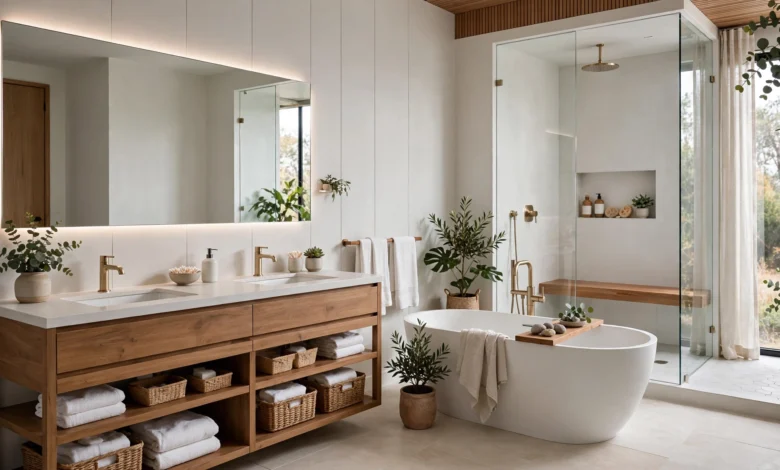
Bathrooms are full of hard, cold materials by necessity, tile, porcelain, glass, so bringing in a warm wood vanity, a woven storage basket, or a textured towel adds balance without sacrificing durability.
Smart and Accessible Bathroom Ideas
The newest wave of bathroom ideas blends technology and accessibility in ways that used to feel purely clinical but now look genuinely stylish.
16. Heated Floors for Year-Round Comfort
Underfloor heating keeps tile from feeling cold underfoot and helps the room dry out faster after a shower, which also reduces the chance of mildew building up in grout lines over time.
17. Curbless Showers for Long-Term Accessibility
A curbless, level-entry shower isn’t only for households with current mobility needs. It’s increasingly common in new renovations because it future-proofs the space, works well with a wheelchair or walker if needed later, and simply looks cleaner and more open in the meantime.
18. Smart Mirrors and Demisters
A mirror with a built-in demister pad and integrated lighting solves two common bathroom annoyances at once: fogging after a shower and poor light for tasks like shaving or applying makeup. It’s a small addition that gets used every single day.
Cost Considerations Before You Commit
Not every idea on this list costs the same, and it helps to know roughly where your money goes before you start picking finishes. Layout changes, like separating a toilet into its own enclosure or converting to a wet room, tend to cost the most because they involve moving plumbing and sometimes structural work. Lighting and fixture swaps sit in the middle, since they’re usually straightforward to install but the fittings themselves vary hugely in price depending on brand and finish. Cosmetic changes, like paint, hardware, and accessories, are the cheapest way to refresh a bathroom without touching plumbing or tile at all.
A few practical points worth keeping in mind as you budget:
- Get multiple quotes for any work involving plumbing or electrics, since pricing for the same job can vary significantly between contractors.
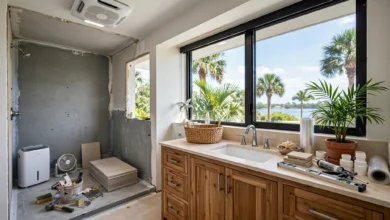
- Set aside a contingency fund, typically 10 to 15 percent of the total budget, for issues that only become visible once old tile or plaster comes down.
- Prioritize waterproofing and ventilation over decorative finishes if the budget is tight. A beautifully tiled bathroom with poor extraction will develop problems within a year or two.
- Phase the project if needed. Fixtures and layout can go in first, with decorative upgrades like lighting fixtures or hardware added later once budget allows.
How to Choose Which Bathroom Ideas Fit Your Space
With eighteen ideas on the table, it helps to have a simple way to narrow them down rather than trying to fit everything into one project. A useful approach is to sort ideas into three groups: fixes for problems you deal with every day, upgrades that would be nice but aren’t urgent, and features that mainly matter if you’re planning to sell the home in the next few years.
For most households, the daily-friction group should come first. If mornings are chaotic because two people need the bathroom at once, layout ideas like separating the toilet or adding a second sink will do more for quality of life than a new freestanding tub ever will. If the room feels dark and uninviting no matter the time of day, lighting upgrades will likely deliver more noticeable improvement than a full retile.
It’s also worth thinking about how long you plan to stay in the home. Curbless showers, wider doorways, and other accessible bathroom ideas pay off over a longer horizon, both for your own future needs and for resale, since more buyers are actively looking for these features than in previous years. Cosmetic trends, on the other hand, are worth choosing based on what you personally enjoy living with, since chasing resale value on paint colors and hardware finishes rarely pays off the way people expect.
Bringing These Bathroom Ideas Together
You don’t need every idea on this list to end up with a bathroom that works well. Start by identifying what actually bothers you about your current space, whether it’s a lack of storage, poor lighting, or a layout that doesn’t suit your household, and prioritize the changes that solve that specific problem. A renovation that fixes real, everyday friction will always feel more successful than one chosen purely to match a trend, even if the trend looks great in photos.
Conclusion
The best bathroom ideas are the ones that hold up to daily use while still looking like a space you enjoy spending time in, and that means thinking through layout, storage, lighting, fixtures, and materials together rather than picking finishes first and hoping the room works itself out. Whether you’re planning a full renovation or making smaller changes over time, prioritizing the features that solve your household’s actual problems, not just the ones that photograph well, will give you a bathroom that stays functional and stylish for years rather than months.