How to Design a Garden That Complements Your Home
how to design a garden that complements your home, garden design ideas, landscape design principles, curb appeal landscaping, architectural garden style, garden colour palette, hardscaping materials, front yard garden design, backyard design ideas, cohesive garden design
9 Proven Ways to Design a Beautiful Garden That Complements Your Home
Introduction
Learning how to design a garden that complements your home is about more than picking pretty plants. A garden that genuinely works pulls its cues from the house itself, its architectural style, its colour palette, its proportions, so the whole property reads as one cohesive picture rather than two unrelated projects sitting side by side. You’ve probably seen it before: a sleek, modern house surrounded by a wild cottage garden, or a charming period home fronted by stark, minimalist landscaping that feels completely out of place. Neither garden is bad on its own. They just don’t belong with the house behind them.
Getting this right isn’t about following strict rules or hiring an expensive designer, though that’s certainly an option for larger projects. It’s about paying attention to a handful of design principles, scale, colour, material continuity, and sightlines, and applying them thoughtfully to your own property. A well-designed garden doesn’t compete with your home for attention. It supports it, extends its style outward, and makes the whole property feel intentional.
This guide walks through nine practical strategies for designing a garden that genuinely complements your home, covering architectural style matching, colour coordination, layout planning, and material choices. Whether you’re working with a compact front yard or a larger backyard renovation, these principles apply at almost any scale and budget. By the end, you’ll have a clear framework for making choices that tie your garden and your home together rather than leaving them at odds.
Start With Your Home’s Architectural Style
The single most important step in garden design that complements your home is understanding the architectural language your house is already speaking, and choosing a garden style that speaks the same one.
Match Formal Homes With Structured Gardens
Colonial, Georgian, and other symmetrical, formal architectural styles generally pair well with structured garden layouts: clipped hedges, symmetrical planting beds, and clearly defined pathways. This kind of order echoes the balance already present in the home’s façade.
Pair Modern Homes With Minimalist Landscaping
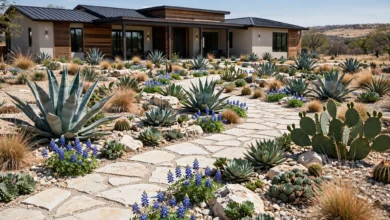
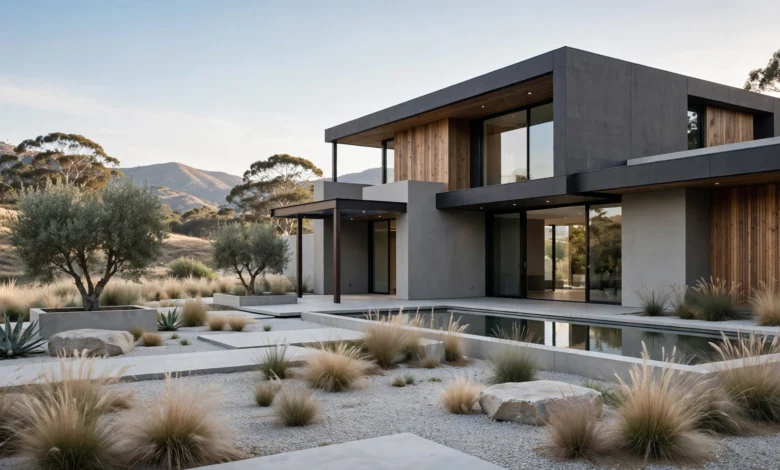
Contemporary homes with clean lines and minimal ornamentation tend to look best with equally restrained landscaping: architectural plants like ornamental grasses or structural succulents, simple hardscaping, and a limited, intentional plant palette rather than a dense, layered cottage-style bed.
Complement Cottage and Craftsman Homes With Layered Planting
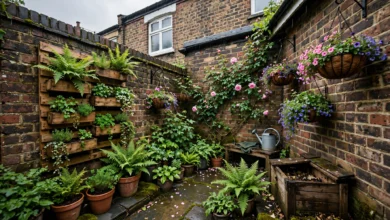
Cottage-style and Craftsman homes generally suit a softer, more layered planting style, mixed perennial borders, climbing roses, and a slightly looser, less formal structure that echoes the handcrafted, organic feel of the architecture itself.


Coordinate Your Garden’s Colour Palette With Your Home
Colour is one of the fastest ways to visually connect (or clash with) your house, and it’s often overlooked in garden planning.
Pull Colours From Your Home’s Exterior
Look at your home’s brick, siding, trim, and roof colours, and choose garden colours that either complement or intentionally contrast with them. A warm-toned brick home, for instance, often pairs beautifully with garden colour schemes in deep reds, oranges, and golds, while a cool grey or white exterior tends to suit blues, purples, and silvery foliage.
Use a Limited, Intentional Colour Scheme
Gardens with too many competing colours can feel chaotic next to a home’s more restrained exterior palette. Sticking to two or three primary colours, plus green foliage as a neutral base, generally creates a more cohesive look than an unplanned mix of whatever looks nice at the nursery.
Consider Seasonal Colour Shifts
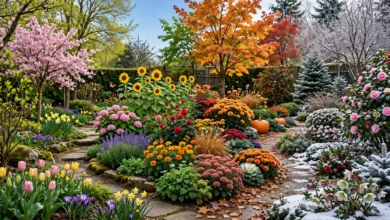
Your home’s exterior colour stays constant year-round, but garden colour changes with the seasons. Planning for how your chosen palette holds up across spring, summer, and autumn ensures the garden design stays complementary throughout the year, not just during peak bloom.
Pay Attention to Scale and Proportion
A common mistake in garden design is choosing plants and features that are wildly out of scale with the home itself, throwing off the visual balance of the whole property.
Match Plant Size to Home Size
A small cottage can be overwhelmed by oversized trees or dramatic, large-leafed plants positioned too close to the structure, while a large, imposing home can look under-landscaped with only small, delicate plantings around its base. Matching plant scale to the scale of the house creates better visual balance.
Consider Sightlines From Inside the Home
Think about what you’ll actually see through your windows. Positioning key plants, focal points, or garden features within view of frequently used rooms extends the sense of design intention from indoors to outdoors, making the whole property feel connected rather than divided at the back door.
Balance Vertical and Horizontal Elements
Homes with strong vertical lines, tall gables, narrow windows, often pair well with some vertical garden elements, like columnar trees or trellised vines, echoing that verticality. Low, horizontal homes tend to suit wider, more spreading plant forms and horizontal hardscaping lines instead.
Choose Materials That Echo Your Home’s Exterior
Hardscaping materials, paths, patios, retaining walls, and edging, offer another opportunity to visually tie the garden back to the house.
Repeat Key Materials From the House
If your home features brick, stone, or a particular type of wood, incorporating that same material into garden paths, retaining walls, or planter boxes creates a strong visual through-line between the structure and the landscape around it.
Choose Complementary, Not Identical, Materials
You don’t need to match materials exactly. A home with brick exterior might pair well with a bluestone path rather than matching brick pavers, as long as the tones and textures feel related rather than clashing.
Keep Hardscape Style Consistent With Architecture
Formal homes generally suit clean-edged, symmetrical hardscaping, while more rustic or organic architectural styles pair better with irregular, natural stone or gravel paths. Consistency in this kind of detail matters more than people often expect.
Design Functional Zones That Reflect How You Live
A garden that complements your home isn’t just about visual style. It also needs to support how the household actually uses its outdoor space.
Plan Entertaining Areas Near Common Living Spaces
Positioning patios, decks, or seating areas near kitchen or living room access points makes outdoor entertaining more natural and creates a smoother transition between indoor and outdoor living. The American Society of Landscape Architects offers detailed guidance on residential outdoor living space planning, available at asla.org.
Keep Private Zones Away From Public-Facing Areas
Quiet, private garden spaces, reading nooks, meditation corners, personal vegetable patches, generally work best positioned away from street-facing areas or shared boundary lines, giving the household genuine outdoor privacy alongside more public-facing curb appeal zones.
Build in Practical Circulation Paths
Pathways should follow how people naturally move through the space, from the driveway to the front door, from the back door to a shed or bin storage area, rather than being placed purely for decorative effect. Functional circulation makes a garden feel considered rather than just decorative.
Use Lighting to Extend Design Cohesion Into the Evening
Garden lighting is often an afterthought, but it plays a real role in how well a garden complements a home after dark.
Highlight Architectural Features
Uplighting on key architectural elements, columns, textured stone, an interesting roofline, extends the home’s design story into the evening and creates visual continuity between structure and landscape after the sun goes down.
Light Pathways for Safety and Style
Low-level path lighting improves safety while reinforcing the garden’s layout after dark, subtly guiding the eye along the same lines that make the garden work well during daylight hours.
Choose Fixture Styles That Match Your Home’s Character
Sleek, minimal fixtures suit contemporary homes, while lantern-style or wrought iron fixtures tend to suit more traditional or cottage-style properties. Small details like this reinforce the overall design cohesion between house and garden.
Select Plants That Reflect Regional and Architectural Character
Plant choice should reflect not just architectural style, but also your specific climate and region, ensuring the garden actually thrives rather than just looking good on paper.
- Choose regionally appropriate plants suited to your climate zone and local rainfall patterns.
- Select a plant palette matching your home’s formality, structured and clipped for formal homes, looser and layered for cottage or craftsman styles.
- Include some evergreen structure so the garden maintains visual interest and continuity with the home year-round, not just during peak bloom season.
- Avoid plants that will quickly outgrow their space near the home’s foundation or windows, which can obscure architectural details over time.
The Royal Horticultural Society provides detailed regional plant guidance that helps match plant choices to both climate and design intent, available at rhs.org.uk.
Bring Front and Back Gardens Into Visual Alignment
Many homeowners design the front yard and backyard as completely separate projects, which can leave the overall property feeling disjointed.
Use Consistent Materials Front and Back
Repeating key hardscape materials, paving styles, or edging details between the front and back gardens helps the whole property read as a single, considered design rather than two unrelated spaces.
Echo Plant Choices Across the Property
While front and back gardens often serve different functions, curb appeal versus private living space, repeating a few key plant species or colours across both areas ties the whole property together visually.
Conclusion
Designing a garden that complements your home comes down to treating the house and the landscape as one connected project rather than two separate decisions made at different times. Starting with your home’s architectural style, coordinating a thoughtful colour palette, respecting scale and proportion, choosing materials that echo the structure, and designing functional zones that reflect how you actually live all work together to create a property that feels genuinely cohesive. Add consistent lighting and plant choices that carry through from front to back, and you’ve got a garden that doesn’t just sit next to your home, but actually supports and extends it. Start with the principle that feels most relevant to your current layout, whether that’s colour or scale, and build the rest of the design around it from there.