Landscape Designer Tips for Homes in Western Australia
Landscape designer tips for Western Australia homes: how to plan for sandy soil, dry summers, and bushfire risk before you plant
Landscape Designer Tips for Western Australia Homes: 9 Proven Ideas for a Thriving Garden
Landscape designer tips for homes in Western Australia usually start with one blunt reality: the soil is sandy, the summers are long and dry, and water restrictions are a genuine planning factor, not an afterthought. Perth and much of the surrounding region sit on some of the fastest-draining soil in the country, paired with a Mediterranean-style climate of hot, dry summers and mild, wetter winters. A garden designed without those two facts in mind tends to struggle badly by the second summer, regardless of how good it looked on installation day.
This guide covers what a landscape designer in Western Australia actually needs to account for, from sandy, nutrient-poor soil to scheme water restrictions and bushfire preparedness in outer suburban and regional properties. Whether you’re in inner Perth, a coastal suburb like Scarborough or Fremantle, or further out toward the Hills or regional WA, the fundamentals of designing for this climate stay largely consistent, even as specific plant choices shift depending on how close you are to the coast or how exposed your block is to wind and sun.
By the end of this article, you’ll understand what makes WA landscape design different from the eastern states, which plants genuinely hold up here, and what to ask a designer before committing to a full garden plan. We’ll also cover reticulation planning, verge garden rules, and the most common mistakes homeowners make when landscaping in this climate without local knowledge.
Why Western Australia Needs a Climate-Specific Approach
WA’s climate and soil combination is genuinely distinct, and a landscape designer working here needs to plan around a few consistent realities:
- Sandy, free-draining soil across much of the Perth metro area and coastal regions, which holds very little water or nutrients
- Long, dry summers, often with several months of minimal rainfall
- Strict water restrictions, since scheme water usage for gardens is regulated across most of the state
- Wind exposure, particularly the strong afternoon sea breeze common across coastal Perth suburbs
- Bushfire risk in bushland-adjacent and regional properties, which affects plant choice and placement
A design that ignores any of these factors usually needs far more intervention, extra watering, replanting, soil amendment, than one built around them from the start.
1. Start With an Honest Soil Assessment
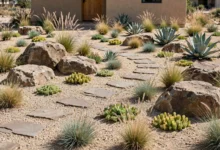
Much of Western Australia sits on deep sandy soil, sometimes referred to locally as “Bassendean sand” or similar regional variants, which drains extremely fast and holds very little organic matter naturally.
A proper soil check for a WA property typically looks at:
- Drainage speed, usually very fast in sandy coastal soils
- Water retention capacity, generally low without amendment
- Existing organic matter, often minimal in undeveloped or new-build blocks
- Soil pH, which can vary depending on proximity to limestone-based coastal areas
Because sandy soil holds so little moisture, most designers recommend working in quality compost, mulch, and soil wetting agents before planting, rather than assuming the soil can support a planting scheme on its own.
2. Choose Waterwise, Drought-Tolerant Plants
Waterwise plants are the backbone of any sensible WA garden design, given both the climate and the state’s water restrictions. Plants that thrive in wetter, cooler climates often fail here without heavy irrigation input.
Reliable choices for Western Australian conditions include:
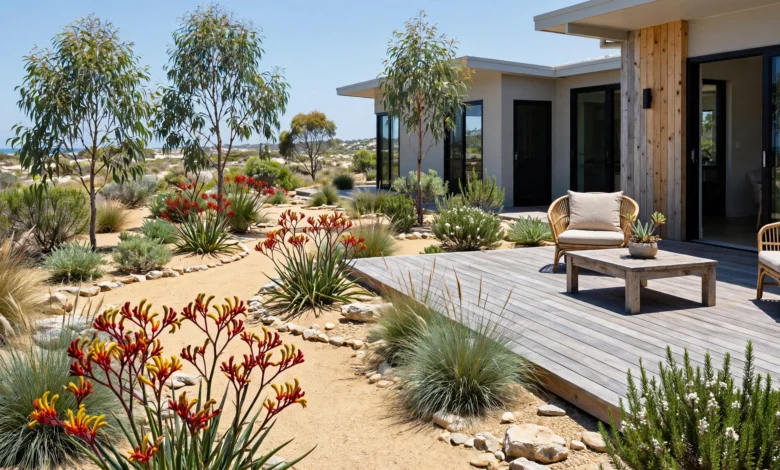
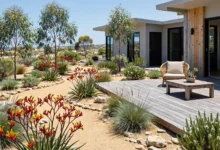
- Kangaroo paw, a genuinely iconic WA native known for thriving in sandy soil with minimal water
- Grevillea varieties, which handle heat, poor soil, and dry spells extremely well
- Banksia, a hardy native shrub or tree suited to sandy coastal conditions
- Eremophila, an underused but highly drought-tolerant native genus
- Correa, a good option for both sun and part-shade areas with minimal upkeep
The Water Corporation’s Waterwise gardening guidance is a solid, locally specific resource for cross-checking plant choices against the state’s actual water availability and restrictions.
3. Plan Around Scheme Water Restrictions
Most of Perth and much of WA operates under scheme water restrictions, which limit which days and times sprinklers can run, particularly during summer. A garden designed without this in mind often ends up under-watered simply because the irrigation schedule can’t keep up with plant needs during permitted watering windows.
Practical planning steps include:
- Designing irrigation zones (reticulation) around permitted watering days rather than assuming daily access
- Grouping plants by water needs so higher-need areas get priority within limited watering windows
- Considering a bore, where permitted, for garden areas not connected to scheme water
- Using drip irrigation over spray systems to reduce water loss to evaporation, especially important given how fast sandy soil drains
Checking current restrictions with your local water authority before finalising an irrigation plan avoids designing a garden that can’t actually be maintained within legal watering limits.
4. Design for Bushfire Resilience Where Relevant
Properties near bushland, in outer Perth suburbs, or in regional Western Australia often fall within a Bushfire Attack Level (BAL) rating, which affects what can be planted and where.
Bushfire-conscious design typically includes:
- Avoiding highly flammable plants (like some ornamental grasses and resinous shrubs) close to the home
- Maintaining clear space between tree canopies and structures
- Choosing low-flammability, well-hydrated groundcovers near buildings
- Following local shire guidelines on vegetation clearance and defendable space
If your property has a BAL rating attached to its planning approval, it’s worth having your designer review those requirements directly, since some plant and layout choices may need council or building surveyor sign-off, particularly for new builds.
5. Account for Coastal Wind and Salt Exposure
Coastal Perth suburbs and much of the WA coastline deal with strong onshore winds and salt exposure that can damage plants not suited to those conditions.
Salt- and wind-tolerant plants worth considering include:
- Coastal rosemary (Westringia), widely used across coastal WA landscaping for its toughness
- Saltbush, extremely tolerant of wind, salt, and poor soil
- Moonah, a hardy native tree well suited to exposed coastal conditions
- Pigface, a low groundcover that handles sandy, salty, exposed sites well
For properties closer to the coast, a designer will often prioritise these hardier species for the most exposed parts of the garden, reserving less wind-tolerant plants for more sheltered courtyards or entry areas.
6. Understand Verge Garden Rules Before Redesigning Your Nature Strip
Many WA councils allow, and increasingly encourage, homeowners to landscape the verge (the nature strip between the footpath and the road) rather than keeping it as plain lawn. This has become a popular way to extend a waterwise garden design without using more of the actual block.
Before redesigning a verge, check:
- Your local council’s specific verge landscaping guidelines, since requirements vary between shires
- Height restrictions near driveways and intersections for visibility
- Approved plant lists, if your council maintains one
- Requirements around maintaining pedestrian access and drainage
Verge gardens done well can significantly reduce a property’s overall water use and mowing requirements, but doing them without checking local rules first can lead to a council request to modify or remove the planting.
7. Use Mulch Generously
Given how fast WA’s sandy soil dries out, mulch is one of the simplest, most effective tools for reducing water loss and improving soil health over time.
Practical mulching tips for WA gardens:
- Apply a thick layer, generally 75-100mm, given how quickly sandy soil loses moisture
- Use coarse, chunky mulch rather than fine mulch, which can form a water-repellent crust in dry conditions
- Keep mulch away from direct contact with plant stems to avoid rot
- Top up mulch annually, since it breaks down and compacts over time
Well-mulched garden beds noticeably reduce watering frequency, which matters given both the climate and the state’s restricted watering days.
8. Design for Low-Maintenance, Year-Round Structure
WA’s long dry summer means many gardens go through a period where flowering plants aren’t at their peak, so a well-planned design leans on structural elements to keep the garden looking intentional year-round.
Structural approaches include:
- Combining evergreen native shrubs with seasonal wildflower displays for contrast
- Using hardscaping (limestone paving, gravel, timber decking) to reduce the total planted area needing water
- Incorporating feature trees like WA native peppermint (Agonis) for shade and structure
- Layering plant heights so the garden reads well even outside peak flowering periods
This kind of layered, structure-first design also tends to require less ongoing maintenance, since it relies less on high-effort seasonal blooms and more on hardy, long-lived native planting.
9. Hire a Designer With Genuine WA Experience
Not every landscape designer, even a talented one, has hands-on experience with Western Australia’s specific combination of sandy soil, dry summers, and water restrictions. A designer used to working in cooler, wetter climates may default to plant and irrigation choices that simply don’t perform the same way here.
When vetting a landscape designer for a Western Australia home, ask:
- Have you designed gardens specifically for Perth or WA conditions before?
- How do you approach irrigation given scheme water restrictions?
- What’s your experience with WA native plants and waterwise design principles?
- If relevant, are you familiar with local bushfire (BAL) planting requirements?
A designer who can answer these specifically, with real examples, is a strong sign they understand the region rather than applying a generic approach. Local government resources, such as those published by individual WA shires and the Department of Water and Environmental Regulation, are also worth reviewing directly if your project involves bore water use or larger-scale drainage planning.
Common Mistakes to Avoid
A few recurring issues show up often in WA landscaping projects:
- Choosing thirsty, non-native plants that require far more water than local restrictions realistically allow
- Skipping soil improvement, leading to plants that never establish properly in bare sandy soil
- Ignoring bushfire requirements on properties near bushland, resulting in costly corrections later
- Overlooking wind and salt exposure on coastal blocks, leading to damaged or dying plants near the coast
Conclusion
Landscape designer tips for homes in Western Australia consistently come back to designing around the state’s sandy soil, dry summers, and water restrictions rather than working against them. Choosing waterwise native plants, planning irrigation around scheme water rules, mulching generously, and factoring in bushfire or coastal exposure where relevant all lead to a garden that survives WA’s toughest months rather than needing constant repair afterward. Get these fundamentals right from the start, and a Western Australian garden can look genuinely striking year-round while staying well within the state’s water and planning restrictions.