Bathroom Ideas Trending Across Homes in New South Wales
Bathroom ideas trending across New South Wales homes, from warm neutrals to curved vanities, with practical guidance for Sydney and regional renovations.
Bathroom Ideas Trending Across Homes in New South Wales
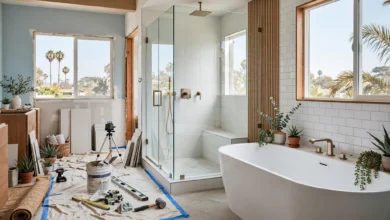
Bathroom ideas are shifting noticeably across New South Wales right now, and it’s not the kind of shift you can put down to a single colour or fixture. Homeowners from Sydney’s inner suburbs to Wollongong, Newcastle, and the Southern Highlands are moving away from the cool, all-white bathrooms that defined the last decade and asking for something warmer, more tactile, and more personal. Natural stone, timber-look finishes, curved edges, and earthy colour palettes are turning up in renovation after renovation, and the reasons behind the shift are as practical as they are aesthetic.
This article looks at the bathroom trends NSW homeowners are actually choosing in 2026, based on what’s showing up across renovation projects in Sydney and the surrounding regions. It covers the materials, colours, layouts, and fixtures gaining traction, along with the practical considerations that matter in a state with its own climate range, coastal humidity, and building requirements. Some of these ideas are purely visual, like a shift toward warm neutrals over stark white. Others, like wall-hung vanities and improved waterproofing, affect how well a bathroom performs day to day and how long it lasts before needing attention again.
Whether you’re planning a full renovation or a smaller refresh, understanding what’s trending and, just as importantly, why it’s trending, will help you make choices that suit your home now and still feel right in ten years, rather than chasing a look that dates quickly.
Why Bathroom Trends Are Shifting Across NSW
Design trends don’t move in isolation. What’s changing across NSW bathrooms reflects a few broader shifts in how people are using and thinking about their homes.
- More time spent at home has pushed homeowners to treat the bathroom less like a purely functional room and more like a space that contributes to daily wellbeing.
- Coastal and humid conditions across much of the state, from Wollongong to the Central Coast, mean material choices need to handle moisture well, not just look good in a showroom.
- Rising renovation costs are pushing homeowners toward finishes and layouts that are genuinely durable, since a bathroom redone every five years is far more expensive than one built to last.
- A broader move away from “hospital white” interiors across Australian residential design generally, with warmth and texture replacing stark, cool palettes.
With that context in mind, here’s what’s actually showing up in bathrooms across the state right now.
1. Warm Neutrals Are Replacing Stark White
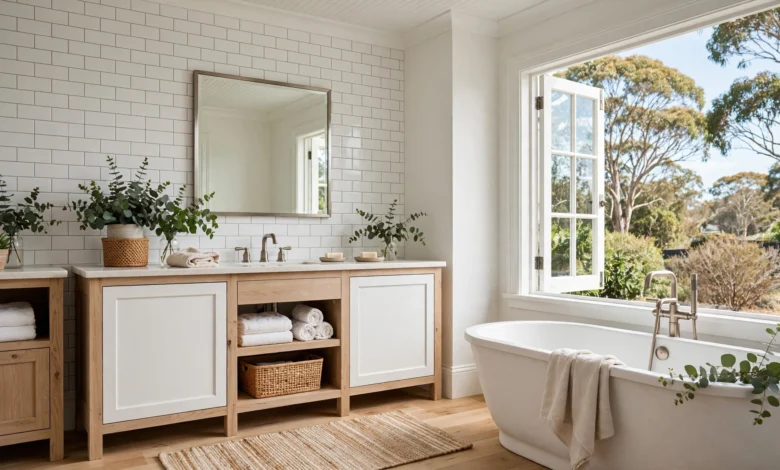
The single biggest shift in bathroom design NSW homeowners are embracing is the move away from crisp white and cool grey toward warmer tones. Soft ivory, sand, almond, warm grey, and gentle clay shades are replacing the glossy white finishes that dominated bathrooms for years.
- Warm neutrals suit NSW homes that get strong natural light, since they soften glare rather than amplifying it the way stark white can on a sunny afternoon.
- These tones also pair naturally with the timber and natural stone elements described below, creating a cohesive palette rather than a room built from mismatched trends.
- Greige, a soft blend of grey and beige, is a particularly common base colour, used as a quiet backdrop that lets tile texture or a feature wall stand out.
2. Large-Format and Natural Stone-Look Tiles
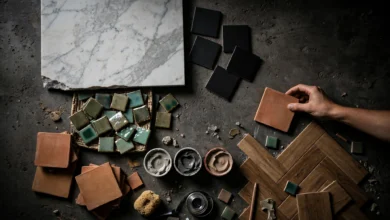
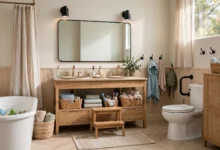
Tile continues to define the character of a bathroom, and the direction in NSW renovations is clearly toward large format tiles with a natural, stone-inspired look.
What’s Trending in Tile
- Oversized tiles with a stone-look finish that reduce the number of grout lines and create a calmer, more continuous surface.
- Travertine, limestone, and marble-look porcelain, chosen for the texture and movement they bring underfoot without the maintenance demands of some natural stones.
- Earthy mosaics and checkerboard patterns, used more sparingly as feature moments rather than covering an entire room.
- Natural stone with visible character, including veined marble-look tiles, used as a statement in freestanding baths or feature walls.
A Practical Note on Tile Choice
Slip resistance deserves attention alongside style, particularly for family bathrooms, homes with older residents, and shower floors. Matte and structured finishes generally offer better grip than high-gloss surfaces, though the specific slip rating should always be checked against the tile’s intended use before it’s installed.
3. Curves Are Softening Hard Edges
Sharp corners and boxy silhouettes are giving way to rounder, softer shapes across NSW bathroom renovations.
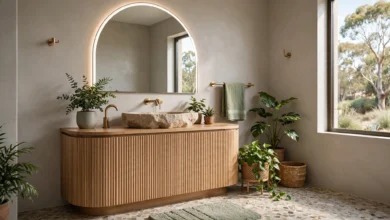
- Arched mirrors and shower niches are appearing in place of hard rectangular versions.
- Curved vanities with rounded edges are both a visual softening and a practical safety improvement in tighter family bathrooms.
- Rounded bath edges and gently curved tapware spouts are replacing the sharp, right-angled shapes that were common through the last decade.
The appeal isn’t purely visual. A curved vanity with no sharp corners is genuinely safer in a busy household bathroom, and arched niches are easier to keep clean than hard-edged rectangles that tend to catch soap residue and grime in the corners.
4. Wall-Hung Vanities and Back-to-Wall Toilets
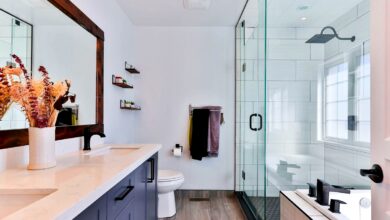
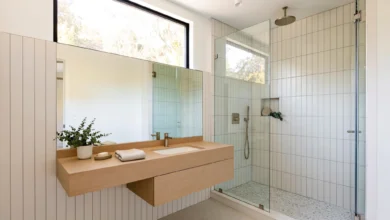
Floating vanities and back-to-wall toilets have become close to standard in updated NSW bathrooms, and for good reason. Keeping fixtures off the floor does two things at once: it makes cleaning genuinely easier, and it amplifies the sense of space by keeping the floor visually and physically clear.
- A wall-hung vanity works particularly well in smaller ensuites, where every visible strip of floor contributes to how open the room feels.
- Back-to-wall toilets hide the cistern and plumbing connections, giving the room a cleaner, more streamlined look.
- This layout doesn’t just modernise a bathroom, it can meaningfully support resale value by making the space feel larger and better finished.
5. Fluted and Textured Glass
Texture is a major theme across NSW bathroom design in 2026, and one of the clearest examples is the rise of fluted glass, glass with a vertical ridged texture, used for shower screens and vanity doors.
- Fluted glass blurs the view through it, offering privacy while still allowing light to pass through.
- It reads as more visually interesting than plain, clear glass, adding texture to a room without introducing another material.
- It also tends to hide water spots and soap marks better than flat, clear glass, which is a genuine practical advantage in daily use.
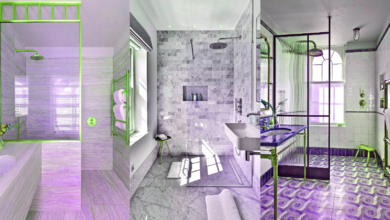
6. Nature-Inspired Colour Accents
Alongside warm neutrals, a number of NSW renovations are introducing deeper, nature-inspired accent colours.
- Sage green and other muted greens, which connect the bathroom to the greenery outside many NSW homes, particularly in leafier suburbs and regional areas.
- Terracotta and clay tones, used as accent walls or feature tile to add warmth without overwhelming the room.
- Warm beige and sand tones, used as a base that pairs comfortably with either of the accent colours above.
These colours are typically used as accents rather than covering the whole room, which keeps the space from feeling dated as quickly as a fully saturated colour scheme might.
7. Tactile, Textured Surfaces
Texture is doing a lot of the visual work in bathrooms that lean toward warmth and calm rather than stark minimalism.
- Textured tile with visible variation, rather than a flat, uniform finish.
- Timber elements, often timber-look vanities or shelving that add warmth without the maintenance concerns of real timber in a wet area.
- Muted metal tapware, such as brushed brass or matte black, chosen for the way it catches light without the high shine of chrome.
The combined effect is a bathroom that feels layered and considered rather than flat and showroom-perfect, which is part of why this direction has staying power compared to more fleeting trends.
8. Wellness-Focused Design
A growing number of bathroom renovations NSW homeowners are undertaking are being planned with wellbeing specifically in mind, not just aesthetics.
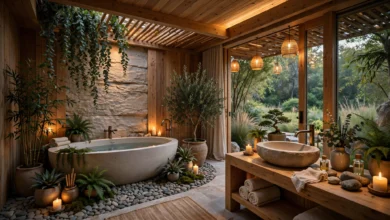
- Spa-inspired features such as rainfall showerheads, freestanding baths, and improved lighting designed to feel calming rather than clinical.
- Layouts that support a slower morning and evening routine rather than being purely transactional.
- Attention to acoustics and ventilation, since a genuinely calming bathroom also needs to feel comfortable, not just look the part.
This shift toward “bathrooms as living environments” rather than purely functional rooms is one of the more significant changes shaping renovation briefs across the state.
9. Sustainable and Water-Efficient Fixtures
With water efficiency an ongoing consideration across NSW, particularly in drier regional areas, sustainable fixtures are showing up more consistently in renovation plans.
- Water-efficient tapware and showerheads that reduce daily water use without a noticeable drop in performance.
- Improved insulation and ventilation to reduce energy use tied to heating and moisture control.
- Durable, long-lasting materials chosen specifically to avoid the cost and waste of an early re-renovation.
Homeowners planning upgrades can check current water efficiency ratings and standards through WaterNSW, which is a useful reference point when comparing fixtures for a renovation in this state.
10. Flexible Layouts for Changing Family Needs
Rather than designing purely around a current trend, many NSW homeowners are choosing layouts built to remain functional for years, regardless of how the household changes.
- Walk-in showers with minimal or no threshold, which improve accessibility for all ages.
- Wider doorways and clearances, planned in from the start rather than retrofitted later.
- Non-slip flooring throughout, not just in the shower, which matters for growing families and ageing residents alike.
- Durable finishes chosen for longevity over the latest short-term trend.
This kind of future-focused planning tends to deliver better long-term value than a bathroom designed to look perfect in photos for exactly one season.
Building Requirements to Keep in Mind
Whatever direction a renovation takes, work in NSW still needs to meet the relevant building and plumbing standards. Renovations that involve moving plumbing, altering waterproofing, or changing structural elements typically require compliance with the National Construction Code, and it’s worth confirming with your builder or plumber exactly what applies to your specific project before work begins. Choosing a licensed, experienced renovator who understands these requirements, alongside the coastal and climate conditions specific to NSW, reduces the risk of leaks, mould, or costly repairs down the track.
How to Bring These Bathroom Ideas Into Your Own Renovation
Not every trend needs to be adopted wholesale to make a genuine difference in how a bathroom looks and feels. A few practical starting points:
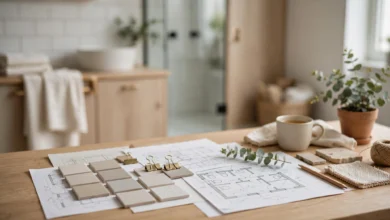
- Start with the palette. Shifting from stark white to a warm neutral base is one of the lowest-cost, highest-impact changes available.
- Choose one texture-forward material. A stone-look tile, fluted glass panel, or timber-look vanity can anchor the whole room without requiring every surface to change.
- Prioritise layout changes that improve daily use. A wall-hung vanity or walk-in shower does more for long-term satisfaction than a purely decorative update.
- Plan for water efficiency from the start. It’s far easier and cheaper to select efficient fixtures during a renovation than to retrofit them later.
- Work with renovators experienced in your specific region. Coastal humidity in Wollongong or the Illawarra calls for different material decisions than a drier inland property.
Conclusion
The bathroom ideas gaining traction across New South Wales in 2026 point toward a clear and fairly consistent direction: warmer neutrals in place of stark white, natural stone-look tile with fewer grout lines, softer curved silhouettes, wall-hung vanities that keep floors clear, and a growing focus on wellness, durability, and water efficiency. None of these trends require abandoning practicality for the sake of style. If anything, the most successful renovations across the state are the ones balancing both, choosing materials and layouts that look considered today and still hold up, functionally and aesthetically, well into the next decade.