. Gardening Ideas Trending Across Homes in Queensland
Discover trending gardening ideas for Queensland homes, from tropical plant choices to water-wise design suited to the subtropics.
10 Exciting Gardening Ideas Trending Across Homes in Queensland
Introduction
Gardening ideas trending across homes in Queensland are shifting in some genuinely interesting directions right now, shaped largely by the state’s subtropical and tropical climate. Between hot, humid summers, a distinct wet season, and the occasional cyclone risk in northern regions, Queensland gardeners have always had to think a little differently than the rest of Australia. What’s changed recently is how many homeowners are leaning into that climate instead of working against it.
From Brisbane’s inner-city courtyards to sprawling properties in Townsville and the Sunshine Coast hinterland, there’s a noticeable shift toward gardens that are lower maintenance, more water-conscious, and built around plants that actually want to grow in Queensland’s conditions rather than fighting them all summer. Edible gardens are booming, native plantings are replacing thirsty ornamentals, and water tanks have gone from a nice-to-have to a near-standard feature in new garden designs.
This article walks through ten of the gardening trends currently gaining traction across Queensland homes, covering plant choices, water management, layout ideas, and a few practical habits that make sense given the state’s weather extremes. Whether you’re gardening in a humid coastal suburb or a drier inland town, these ideas reflect what’s actually working for homeowners across the state right now, not generic advice borrowed from a completely different climate. Let’s get into what’s trending and why it holds up.
Understand Queensland’s Growing Conditions
Before looking at specific trends, it helps to understand why Queensland gardening looks so different from the rest of the country.
A Climate of Extremes
Much of Queensland experiences a distinct wet season, generally November through March, followed by a drier, milder period through winter. Northern parts of the state fall into genuinely tropical zones, while southern regions like Brisbane and the Darling Downs are more subtropical to temperate. This split means gardening ideas for Queensland homes need to account for heavy rainfall and cyclone risk in some regions, and drier, more moderate conditions in others.
Humidity Shapes Plant Health
High humidity, especially along the coast, creates ideal conditions for fungal disease if airflow and drainage aren’t considered. Many of the trends below directly respond to this, favouring plants and layouts that handle moisture well rather than fighting it.
Trend 1: Edible and Kitchen Gardens Are Booming
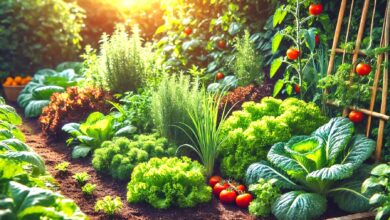
Growing your own food has become one of the most visible gardening ideas trending across homes in Queensland, and the state’s climate makes it easier than most.
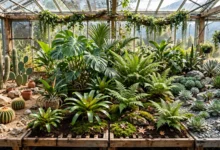
Tropical Fruit Trees in Backyard Spaces
Mango, banana, dragon fruit, and passionfruit are increasingly common in suburban backyards, taking advantage of Queensland’s warm climate to produce fruit that would need a greenhouse almost anywhere else in the country. Even smaller yards are fitting in dwarf mango varieties or trellised passionfruit vines.
Year-Round Vegetable Growing
Because Queensland rarely sees a hard frost outside its southern and elevated regions, many homeowners are growing vegetables nearly year-round, adjusting varieties by season rather than pausing entirely over winter like colder states do.
Trend 2: Native and Drought-Tolerant Landscaping
Water-wise, low-maintenance native gardens continue gaining popularity, particularly as homeowners look to cut down on both watering time and water bills.
Queensland Native Plants Take Centre Stage
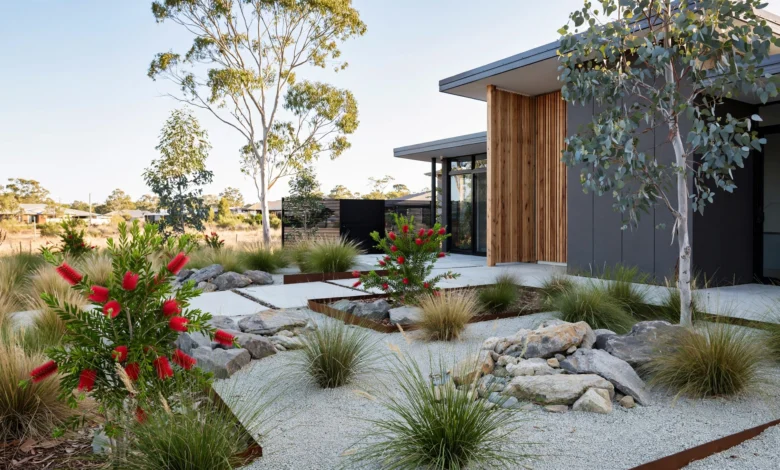
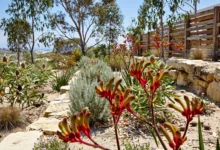
Species like grevillea, lilly pilly, kangaroo paw, and native frangipani are increasingly replacing thirsty imported ornamentals. These plants are naturally suited to local rainfall patterns and soil, generally requiring far less irrigation once established. The Queensland Department of Agriculture and Fisheries provides detailed regional planting guides that help homeowners choose species suited to their specific area, available at daf.qld.gov.au.
Xeriscaping Gains Ground Inland
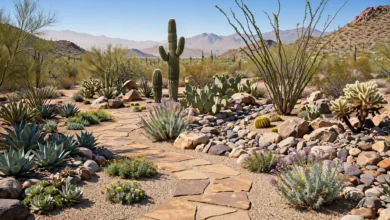
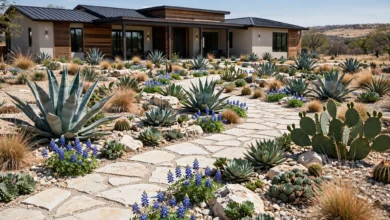
In drier inland regions like the Darling Downs and parts of Central Queensland, xeriscaping principles, using drought-tolerant plants, gravel groundcover, and efficient irrigation, are becoming a genuinely popular alternative to traditional lawn-heavy landscaping.
Trend 3: Rainwater Harvesting and Water Tanks
Water tanks have shifted from an optional add-on to a near-standard feature in Queensland garden design.
Capturing the Wet Season
Queensland’s wet season delivers a huge volume of rainfall in a short window, and homeowners are increasingly installing tanks to capture and store that water for use during drier months. This significantly cuts mains water use for irrigation across the rest of the year.
Pairing Tanks With Drip Irrigation
Combining rainwater tanks with drip irrigation systems allows stored water to be used efficiently, delivering it directly to plant roots rather than losing volume to evaporation, which is a real concern during Queensland’s hot, humid summers.
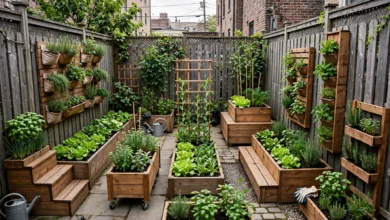
Trend 4: Raised Garden Beds for Better Drainage
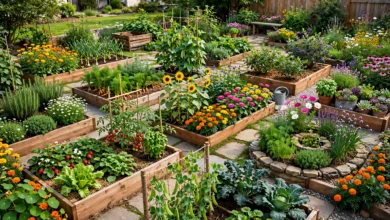
Raised beds are increasingly common across Queensland, largely as a direct response to heavy wet-season rainfall and often poor-draining clay soil.
Solving Drainage Problems
Raised beds lift plant roots above waterlogged ground during heavy downpours, reducing root rot risk in a way that in-ground beds often can’t manage during Queensland’s wettest months.
Making Gardening More Accessible
Beyond drainage, raised beds are popular simply because they reduce bending and make maintenance easier, which is part of why they’ve become such a visible trend in both suburban Brisbane gardens and larger rural properties.
Trend 5: Vertical Gardening in Urban Areas
As inner-city living becomes more common in cities like Brisbane and the Gold Coast, vertical gardening has become one of the more practical gardening ideas for Queensland homes with limited yard space.
Living Walls and Trellis Systems
Vertical planters, trellises, and living walls let homeowners grow herbs, vegetables, and flowering vines in small courtyards and balconies, making use of vertical space that would otherwise sit empty in tightly built urban blocks.
Vining Tropical Plants
Queensland’s climate suits vining plants particularly well. Passionfruit, choko, and various flowering vines thrive on trellis systems, adding greenery without requiring much ground space at all.
Trend 6: Cyclone-Resilient Garden Design
Particularly in North and Far North Queensland, homeowners are increasingly designing gardens with storm resilience in mind.
- Choosing flexible, wind-tolerant plants like palms and grasses that bend rather than snap in strong wind.
- Avoiding large, shallow-rooted trees positioned too close to the home.
- Securing loose garden furniture and structures ahead of cyclone season.
- Spacing plantings to reduce debris buildup and improve airflow during storms.
- Choosing native species that have naturally adapted to the region’s storm patterns over generations.
Trend 7: Low-Maintenance Landscaping
Busy lifestyles and rising water costs have pushed many Queensland homeowners toward gardens that look good without demanding constant attention.
Reducing Lawn Area
Traditional turf lawns require regular watering and mowing, both of which become more demanding in Queensland’s heat. Many homeowners are replacing sections of lawn with mulched garden beds, groundcover, or hardscaping to cut down on upkeep.
Choosing Self-Sufficient Plant Varieties
Native and drought-tolerant plants generally need less fertilising, pruning, and watering once established, which fits neatly into the broader low-maintenance trend showing up across the state.
Trend 8: Backyard Composting and Sustainability
Sustainability-focused gardening continues to grow, with composting leading the way as one of the simplest changes homeowners are making.
Turning Food Scraps Into Garden Fuel
Composting kitchen scraps and garden waste reduces landfill contribution while producing free, nutrient-rich material for garden beds. Given Queensland’s warm climate, compost also tends to break down faster than in cooler states, making it a particularly efficient practice here.
Worm Farms for Small Spaces
For homeowners without much yard space, worm farms offer a compact composting alternative that works well even on an apartment balcony, another reason this trend has spread well beyond larger suburban blocks.
Trend 9: Pollinator-Friendly Gardens
Supporting local bees and pollinators has become a noticeable trend, particularly as awareness grows around native bee populations.
Planting for Native Bees
Flowering natives like bottlebrush, grevillea, and tea tree attract native bee species, along with butterflies and other pollinators. This benefits any vegetable or fruit plantings nearby by improving pollination rates naturally.
Adding Bee Hotels and Habitat
Small native bee hotels, simple wooden structures with drilled holes, are becoming a common addition to Queensland gardens, giving solitary native bee species a place to nest without requiring a full hive setup.
Trend 10: Shade Gardens for Outdoor Living
With Queensland’s intense summer sun, shade-focused garden design has become increasingly popular for both comfort and plant health.
Layering Shade With Trees and Structures
Combining shade trees, pergolas, and shade cloth creates cooler outdoor living spaces, extending how much of the year a backyard is actually comfortable to use. The ABC Gardening Australia program offers reliable, region-specific advice on shade-tolerant plant selection for Australian gardens, available at abc.net.au/gardening.
Choosing Shade-Loving Understorey Plants
Ferns, bromeliads, and various native groundcovers thrive beneath tree canopy or structural shade, adding lush greenery to spots where sun-loving plants would otherwise struggle in Queensland’s harsh midday light.
Practical Tips for Getting Started
If you’re looking to bring a few of these trends into your own yard, here’s a simple starting checklist:
- Assess your region — coastal, inland, or tropical north — before choosing plants.
- Prioritise native species for lower maintenance and better climate suitability.
- Install a rainwater tank if you don’t already have one, paired with drip irrigation.
- Consider raised beds if your soil drains poorly during the wet season.
- Add shade structures to extend outdoor usability through summer.
- Start small with composting, even a basic bin or worm farm makes a difference.
Conclusion
The gardening ideas trending across homes in Queensland right now largely reflect a shift toward working with the state’s subtropical and tropical climate rather than against it. Edible gardens, native and drought-tolerant landscaping, rainwater harvesting, raised beds, and shade-focused design have all gained traction because they genuinely suit Queensland’s mix of intense heat, heavy wet seasons, and occasional storm risk. Whether you’re gardening in a humid coastal suburb, a drier inland town, or a cyclone-prone northern region, these trends offer a practical starting point for a garden that holds up through the seasons without constant fighting against the climate. Pick a couple of ideas that fit your specific yard and region, and build from there.