How to Choose a Landscape Designer for a Sloped Yard
How to choose a landscape designer for a sloped yard: what to check, what to ask, and the mistakes that cost homeowners the most.
How to Choose a Landscape Designer for a Sloped Yard: 7 Essential Tips to Avoid Costly Mistakes
Introduction
How to choose a landscape designer for a sloped yard is a question that comes up a lot more than people expect, mainly because sloped properties don’t forgive bad planning the way flat yards do. A retaining wall built without proper drainage can fail within a few seasons. Soil left unstable after grading can wash away in a single heavy storm, taking plants, mulch, and even sections of pathway with it. Sloped yards need someone who understands structural engineering basics, water flow, and erosion control, not just someone who’s good at picking plants.
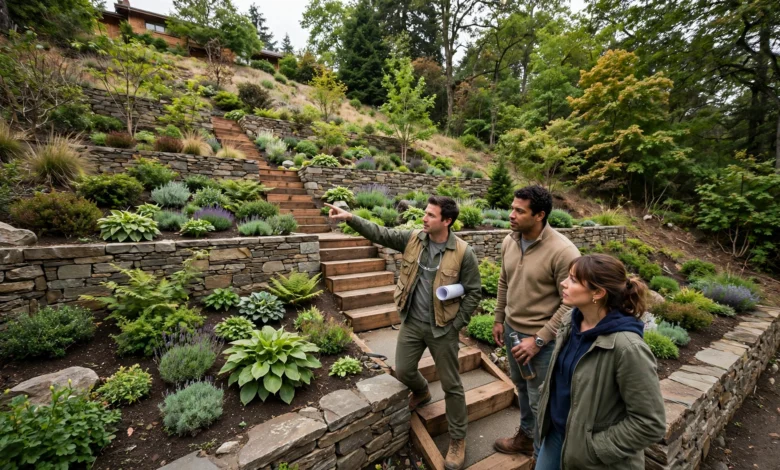
This is exactly where hiring the wrong designer becomes an expensive lesson. A generalist who’s mostly worked on flat suburban lots may not think through the drainage implications of a hillside terrace, or may underestimate the cost of the retaining structure needed to make a design actually safe. On the other hand, a designer with genuine sloped-site experience can turn a difficult, awkward yard into one of the most interesting features of a property, with tiered gardens, dry creek beds, and usable flat spaces carved out of what used to be unusable hillside.
This guide walks through exactly what to look for when hiring a landscape designer for a sloped yard, the questions worth asking before signing anything, and the red flags that suggest a designer isn’t the right fit for a challenging site.
1. Understand Why Sloped Yards Need a Specialist
Not every landscape designer has the background needed to handle a slope safely. Before you start interviewing candidates, it helps to understand what actually makes sloped-site design different.
The Core Challenges of Sloped Properties
- Erosion risk: Water moves faster on a slope, carrying topsoil and mulch away if the site isn’t graded and planted correctly
- Structural loads: Retaining walls above a certain height often require engineering calculations and building permits
- Drainage complexity: Water has to be redirected, not just allowed to flow downhill toward a house foundation or neighboring property
- Access and equipment limits: Heavy machinery may not be able to reach certain parts of a steep site, which changes what’s realistically buildable
Why General Landscapers Sometimes Fall Short
A landscaper who mainly installs lawns, patios, and garden beds on flat ground may not have hands-on experience with terracing, geotechnical considerations, or slope stabilization techniques. This doesn’t make them a bad landscaper, but it does make them the wrong choice for a steep or unstable yard.
2. Look for Relevant Experience and a Strong Portfolio
This is the single most important filter when choosing a landscape designer for a sloped yard. Credentials matter, but seeing actual completed projects on comparable terrain matters more.
What to Look for in a Portfolio
- Photos of completed projects on slopes similar in grade and size to yours
- Before-and-after images showing how erosion or drainage problems were solved
- A mix of hardscape work (retaining walls, steps, terraces) and planting design, since sloped yards usually need both
Questions to Ask About Past Projects
- How many sloped-site projects have you completed in the past few years?
- Can I see photos of a project with a similar grade to mine?
- Did any of those projects require a retaining wall taller than one meter, and if so, was an engineer involved?
- How have those projects held up over time, particularly after heavy rain?
A designer with real experience will answer these questions specifically, with details about grade percentages, soil types, and drainage solutions used. Vague answers are a sign to keep looking.
3. Check Credentials, Licensing, and Insurance
Sloped-yard projects often involve structural elements, which raises the stakes if something goes wrong. It’s worth confirming a designer’s qualifications before any contract is signed.
Credentials Worth Confirming
- Membership in a recognized professional body, which typically requires ongoing education and adherence to design standards
- Proper business licensing for landscape design and, separately, for any construction work involved
- Liability insurance that covers both the designer and any subcontractors working on retaining walls or grading
The American Society of Landscape Architects maintains guidance on professional standards and can be a useful reference point when evaluating whether a designer’s credentials are current and legitimate.
When to Bring in a Structural Engineer
Many regions require a licensed structural or geotechnical engineer to sign off on retaining walls above a certain height, commonly around one meter, though this varies by local building code. A good landscape designer will flag this requirement upfront rather than waiting for a building inspector to catch it later. According to the U.S. Environmental Protection Agency’s guidance on erosion and sediment control, proper slope stabilization measures are essential during any construction that disturbs soil on a graded site, which reinforces why engineering input matters on steeper projects.
4. Ask About Their Approach to Drainage and Erosion Control
This is where a lot of sloped-yard projects succeed or fail. It’s worth asking directly how a designer plans to manage water on your specific site, rather than assuming it’s been considered.
Drainage Solutions to Discuss
- French drains: buried perforated pipes that redirect groundwater away from structures
- Swales: shallow, vegetated channels that slow and direct surface water
- Terracing: breaking a slope into flat sections, which reduces water speed and creates usable space
- Retaining walls with weep holes: allow built-up water pressure behind the wall to release safely
Erosion Control Techniques
- Groundcover planting on exposed slopes to hold soil in place while other plants establish
- Erosion control blankets or matting during the establishment period after installation
- Strategic placement of rocks or boulders to slow water flow at key points
A designer who can walk through these options confidently, and explain which ones suit your specific slope and soil type, is demonstrating real technical knowledge rather than surface-level familiarity.
5. Discuss Design Style and Long-Term Vision
Technical skill matters, but a sloped yard is still a garden that needs to reflect how you actually want to use the space. This is where design sensibility comes into the conversation.
Questions About Design Approach
- Do you prefer a formal, terraced look or a more naturalistic, informal hillside garden?
- How will the design account for the different microclimates that often exist at the top versus the bottom of a slope?
- What options exist for creating a usable flat area, such as a patio or lawn, partway up or down the slope?
Balancing Function and Aesthetics
A well-designed sloped yard typically includes:
- A stable, well-drained planting scheme suited to the slope’s exposure and soil
- At least one usable flat or gently sloped area for seating, dining, or play
- Clear, safe pathways or steps connecting different levels
- Retaining structures that double as design features, not just utilitarian walls
6. Get Detailed Quotes and Understand the Cost Breakdown
Sloped-yard projects tend to cost more than flat-yard projects of a similar size, largely due to the structural and drainage work involved. Understanding the cost breakdown upfront prevents surprises later.
What Should Be Itemized in a Quote
- Site assessment and any required engineering or soil testing
- Grading and earthwork
- Retaining wall materials and construction
- Drainage systems (pipes, gravel, French drains, etc.)
- Planting, including groundcover for erosion control
- Ongoing maintenance recommendations for the first year
Red Flags in a Quote
- A single lump sum with no breakdown of materials or labor
- No mention of drainage or erosion control as a line item
- Pricing significantly lower than other quotes without a clear explanation
- No allowance for potential soil or site condition surprises once work begins
7. Review the Contract and Project Timeline Carefully
Once you’ve chosen a designer, the contract itself deserves close attention, particularly on a project with structural elements.
What a Solid Contract Should Include
- A detailed scope of work, including specific materials and dimensions
- A clear payment schedule tied to project milestones, not just a deposit and final payment
- Timeline estimates, with an acknowledgment that weather can affect grading and drainage work
- Warranty information covering both plant establishment and any structural work
- A clause outlining what happens if unexpected site conditions (like buried rock or unstable soil) are discovered mid-project
Setting Realistic Expectations on Timeline
Sloped-yard projects often take longer than flat-yard equivalents because of the sequencing involved. Grading and drainage typically need to be finished and allowed to settle before retaining walls go in, and planting usually comes last, once the structural work is complete and stable.
Common Mistakes Homeowners Make
- Hiring based on price alone, without checking sloped-site experience
- Skipping the step of asking for engineering sign-off on tall retaining walls
- Underestimating how much drainage work costs relative to visible landscaping
- Not asking to see how past sloped projects have held up over several years
- Rushing the planting phase before erosion control measures have had time to establish
Conclusion
Choosing the right landscape designer for a sloped yard comes down to verifying real experience with similar terrain, confirming proper credentials and engineering input where needed, and asking direct questions about drainage and erosion control before any work begins. A sloped yard rewards careful planning and specialist knowledge, and it punishes shortcuts far more visibly than a flat lot does. By checking portfolios, understanding cost breakdowns, and reviewing contracts carefully, homeowners can avoid the costly failures that come from hiring the wrong fit, and end up with a hillside garden that’s both stable and genuinely enjoyable to use for years to come.