Outdoor Design Tips for Homes in New South Wales
outdoor design tips, outdoor design New South Wales, landscaping NSW, alfresco living, native plants NSW, bushfire resistant landscaping, backyard renovation Sydney, outdoor living spaces, NSW council approval outdoor structures, water-wise gardening
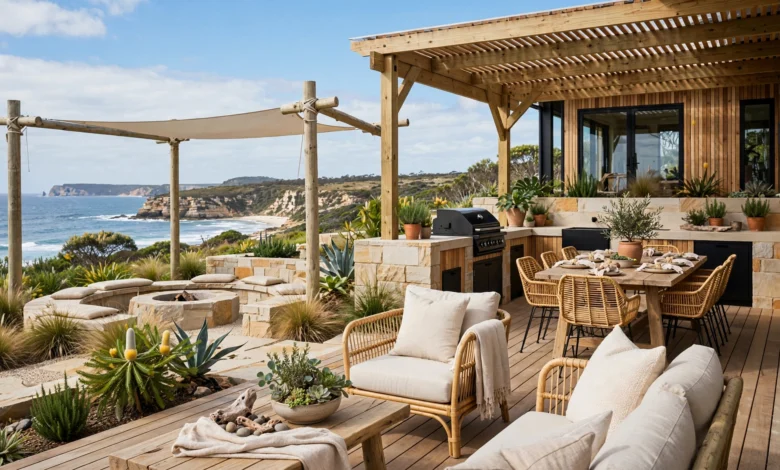
Outdoor Design Tips for Homes in New South Wales: 10 Essential Ways to Improve Your Space
Introduction
Outdoor design tips for homes in New South Wales need to account for something most generic advice ignores: this state has wildly different conditions depending on where you live. A backyard in coastal Wollongong deals with salt spray and humidity. A property in the Blue Mountains has to think about bushfire risk and frost. A Western Sydney home bakes through long, dry summers. None of these situations call for the same approach, yet most outdoor design guides treat Australia as one climate zone.
This article breaks down what actually matters when planning or renovating an outdoor space in NSW, from material choices that hold up to harsh sun and coastal air, to the council rules that catch a lot of homeowners off guard. Whether you’re planning a full backyard renovation, adding a deck, or just trying to get your garden to survive another summer, the goal here is to give you information you can actually use rather than vague inspiration.
We’ll cover materials, landscaping, outdoor living areas, lighting, water features, bushfire compliance, and budget considerations. By the end, you should have a clear sense of what’s realistic for your property, your climate zone, and your budget, along with where to check the fine print before you start digging.
1. Understand Your Local Climate Before You Design Anything
Good outdoor design starts with an honest look at your specific location, not just “Sydney weather” as a blanket assumption. NSW spans coastal plains, the Blue Mountains, the Central West, and far western desert regions, and each has different demands on materials and planting.
Some practical questions worth answering before you draw up any plans:
- Does your property get direct afternoon sun for most of the year, or is it shaded by trees and neighbouring buildings?
- Are you within a few kilometres of the coast, where salt air corrodes untreated metal and some finishes?
- Is your area prone to heavy summer storms, and does your yard drain well or pool water?
- What’s your local bushfire attack level (BAL), if you’re in a bushfire-prone zone?
Getting these answers right shapes almost every other decision in this guide, from which timber to use on a deck to which plants will actually survive without constant watering.
2. Choosing Materials That Suit NSW Conditions
Material selection is where a lot of outdoor design projects either pay off long-term or turn into an expensive maintenance headache. NSW’s UV exposure is intense, and coastal areas add corrosion into the mix.
Decking
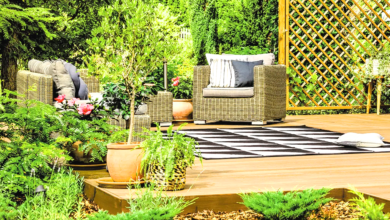
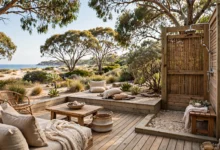
Timber decking still looks great, but not every timber species handles Australian conditions equally well. Hardwoods like spotted gum and blackbutt are popular because they’re naturally durable and resist rot better than softer timbers. If low maintenance matters more to you than the exact look of natural wood, composite decking is worth considering. It doesn’t need the annual oiling that timber does and holds up well against sun fading.
For coastal properties, avoid untreated mild steel fixings. Stainless steel or hot-dip galvanised fittings cost more up front but save you from replacing rusted screws and brackets within a few years.
Paving and Hardscaping
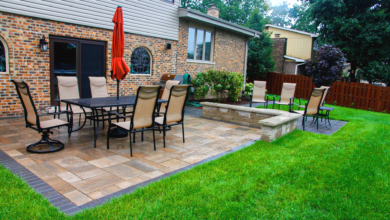
Natural stone, such as sandstone or bluestone, is common across NSW and tends to age well, though sandstone can be softer and more porous, which matters near pools or high-traffic areas. Concrete pavers are a budget-friendly alternative and now come in enough finishes to mimic natural stone reasonably well.
A few things to keep in mind with paving:
- Choose slip-resistant surfaces around pools and wet areas, which is often a compliance requirement anyway.
- Light-coloured paving reflects heat and stays cooler underfoot in summer, which matters more than people expect in Western Sydney’s heat.
- Proper drainage falls (the slope of the paving) prevent water pooling near the house foundation.
Fencing and Screening
Timber, colorbond steel, and aluminium slat fencing all show up regularly in NSW backyards. Colorbond holds up well against weather and bushfire embers, which is one reason it’s common in fire-prone areas. Timber fencing needs more upkeep but blends more naturally into garden design.
3. Landscaping Tips for NSW Gardens
Landscaping is arguably where outdoor design tips matter most, because plant choices that work in Melbourne or Brisbane don’t always translate to NSW conditions, particularly in areas with long dry spells or heavy clay soil.
Go Native Where Possible
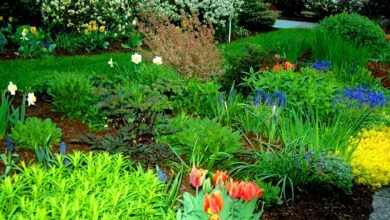
Native plants have adapted to Australian soil and rainfall patterns over a very long time, which makes them a genuinely practical choice, not just an aesthetic one. Species like grevilleas, bottlebrush (callistemon), lomandra, and kangaroo paw are common in NSW gardens because they tolerate dry spells and generally need less fertiliser than exotic species.
The Australian Native Plants Society and resources like the Gardening Australia plant guides are useful starting points if you want species suited specifically to your local rainfall and soil type.
Water-Wise Gardening
Water restrictions come and go across NSW depending on drought conditions, so designing a garden that doesn’t rely on constant watering is worth doing regardless. A few approaches that help:
- Group plants with similar water needs together (this is sometimes called hydrozoning).
- Use mulch generously, which reduces evaporation and keeps soil temperature more stable.
- Install drip irrigation instead of sprinklers where practical, since it wastes far less water.
- Choose drought-tolerant groundcovers instead of thirsty lawn in low-traffic areas.
Soil Preparation Matters More Than People Think
A lot of Sydney and regional NSW soil is heavy clay, which drains poorly and can suffocate plant roots. Amending soil with organic compost before planting, and building raised garden beds where drainage is genuinely poor, saves a lot of frustration later.
4. Designing Outdoor Living Areas
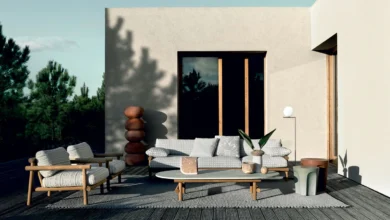
Alfresco living is a big part of how NSW homeowners use their backyards, given how much of the year is warm enough to eat, entertain, and relax outside. Good outdoor design for these spaces balances comfort, shade, and how the area connects back to the house.
Patios and Alfresco Zones
An alfresco area works best when it feels like a natural extension of the indoor living space rather than a separate structure tacked onto the yard. Matching flooring materials or at least colour tones between the kitchen and the patio helps this flow. Covered alfresco areas also get more use across the year, since they’re usable even during light rain or peak sun.
Pergolas and Shade Structures
Given how strong UV exposure is across most of NSW, shade structures aren’t just a style choice, they’re close to a necessity for outdoor spaces that get real use in summer. Options include:
- Fixed pergolas with a solid roof, which give reliable shade and can be built to match the home’s roofline.
- Louvre roof systems that open and close, giving flexibility between full shade and open sky.
- Shade sails, which are the cheapest option and work well for temporary or budget-conscious setups.
Outdoor Kitchens
Outdoor kitchens have become more common in NSW backyard renovations, ranging from a simple built-in barbecue to a full kitchen with sink, bench space, and storage. If you’re considering one, check whether your council requires approval for plumbing or gas connections before committing to a layout, since retrofitting utilities after paving is finished gets expensive fast.
5. Lighting for Function and Atmosphere
Lighting gets overlooked in a lot of backyard planning, but it changes how usable a space is after sunset and adds a layer of safety around steps, paths, and pool edges.
A layered approach tends to work best:
- Path and step lighting for safety, usually low-voltage LED strips or bollard lights.
- Ambient lighting such as string lights or wall-mounted fixtures for general atmosphere during evening entertaining.
- Feature lighting aimed at a specimen tree, a garden bed, or an architectural element of the house.
Solar-powered options have improved a lot in recent years and are worth considering for garden beds and paths, since they avoid the cost of running new electrical cabling. For anything near a pool or requiring hardwired power, a licensed electrician is required under NSW regulations, so factor that into your budget.
6. Pools and Water Features
Given the NSW climate, a pool is a common addition, but it comes with more regulatory requirements than most other outdoor projects.
Compliance Comes First
Under NSW law, all pools with water deeper than 300mm require compliant fencing and safety barriers, along with registration on the NSW Swimming Pool Register. This isn’t optional, and non-compliant pools can result in fines. It’s worth checking requirements through your local council or the NSW Government Planning Portal before finalising a pool design, since setback rules and fencing requirements vary by council area.
Smaller Water Features
Not every backyard needs a full pool. A pond, a small fountain, or a plunge pool can bring some of the same benefits, cooling the space and adding visual interest, without the same footprint or compliance burden. Plunge pools in particular have become popular on smaller Sydney blocks where space for a full-size pool simply isn’t there.
7. Bushfire-Resistant Outdoor Design
If your property sits in a designated bushfire-prone area, which covers a significant portion of regional and semi-rural NSW, your outdoor design decisions are shaped by your Bushfire Attack Level (BAL) rating. This rating determines what materials and construction methods are required by law for anything close to the house.
Key considerations for bushfire-prone properties:
- Avoid flammable mulch types like pine bark close to the house; gravel or rock mulch is a safer alternative near structures.
- Choose fire-resistant plant species and keep vegetation clear of windows and eaves.
- Use non-combustible decking and fencing materials, particularly within the first several metres of the building.
- Check requirements through the NSW Rural Fire Service, since Planning for Bush Fire Protection guidelines set out specific construction and landscaping standards for different BAL ratings.
Skipping this step isn’t just a safety risk, it can also affect insurance and future property sales, since compliance certificates are often requested during conveyancing.
8. Council Regulations and Approvals
This is the part of outdoor design that catches the most people off guard. Not every backyard project needs council approval, but plenty do, and the rules vary between local government areas.
Projects that commonly require approval or at least a check with council:
- Structures over a certain height or floor area, including some pergolas and outdoor kitchens.
- Pools and their associated fencing.
- Retaining walls above a certain height, particularly on sloped blocks.
- Any work that affects stormwater drainage or council easements.
- Tree removal, which is regulated in most NSW council areas even on private property.
Some smaller projects fall under complying development or exempt development pathways, which skip the full development application process if they meet set criteria. It’s worth checking your specific council’s requirements, or the state planning portal, before committing to a design, since redesigning after a rejected application costs both time and money.
9. Budget-Friendly Outdoor Design Tips
A full backyard renovation isn’t within everyone’s budget, and it doesn’t need to be to make a real difference. A few lower-cost changes that still have a noticeable impact:
- Repaint or reseal existing fencing and decking rather than replacing it outright.
- Add potted native plants for colour and texture without committing to a full garden bed overhaul.
- Use outdoor rugs and cushions to make an existing patio feel more finished.
- Install solar path lighting, which is inexpensive and doesn’t require an electrician.
- Mulch garden beds, which improves appearance and reduces watering needs at a low cost.
Phasing a renovation over a couple of years, rather than doing everything at once, also spreads the cost and gives you time to see how you actually use the space before committing to expensive permanent structures.
10. Working With Professionals vs DIY
Some parts of outdoor design are genuinely suited to a confident DIY approach: painting fences, planting garden beds, laying stepping stones. Others, particularly anything involving structural work, electrical, plumbing, or pool construction, need a licensed tradesperson under NSW law regardless of your own skill level.
A reasonable way to think about it:
- DIY-friendly: garden beds, mulching, potted plants, simple furniture placement, basic lighting with plug-in solar fixtures.
- Better left to professionals: pergola and deck construction, retaining walls, electrical wiring, pool installation, and anything requiring council-approved plans.
Getting quotes from a couple of licensed contractors, even for projects you think you might DIY, is a useful way to gauge whether the time and material savings actually justify doing it yourself.
Conclusion
Good outdoor design tips for homes in New South Wales come down to matching decisions to your actual conditions rather than following generic advice built for a different climate. That means choosing materials suited to sun, salt air, or bushfire risk, picking plants that can survive your rainfall pattern, checking council and safety requirements before you start building, and being realistic about your budget and what needs a professional versus what you can handle yourself. Get those fundamentals right and the rest, the styling, the furniture, the finishing touches, becomes much easier to get right too.