Outdoor Design Ideas for Homes in Manchester
Outdoor design ideas for homes in Manchester, covering shelter, drainage, and planting choices built for the region's wet climate.
Introduction
Outdoor design ideas for homes in Manchester need to solve one problem before anything else: the rain. Manchester sees rainfall on well over 140 days a year on average, and any garden or patio plan that doesn’t account for that is going to spend most of its life sitting empty and soggy. That’s a very different starting point from the sun-first design advice you’ll find in most generic outdoor living guides.
The good news is that Manchester’s climate isn’t actually a dealbreaker for a great outdoor space. Mild summers, decent light in the evenings, and cooler temperatures mean gardens here can be genuinely comfortable to use for much of the year, as long as the design accounts for shelter, drainage, and a bit of extra structure. Terraced houses, semi-detached homes with modest gardens, and new-build properties with small courtyards all call for slightly different approaches, but the same core principles apply across the city, from Chorlton to Didsbury to the suburbs further out.
This guide covers practical ways to design an outdoor space that actually works in Manchester’s climate, from covered seating and heated areas to planting choices and drainage solutions that keep your garden usable instead of waterlogged. Whether you’re working with a small back yard or a bigger garden, these ideas are built around making the most of the weather you’ve actually got, not the weather you wish you had.
Why Manchester Gardens Need a Different Approach
Manchester’s climate sits firmly in the temperate maritime category, meaning mild temperatures year-round but frequent rain and overcast skies. According to the Met Office, Greater Manchester typically records rainfall on more than a third of the days in a given year, with autumn and winter being the wettest stretches.
That means a successful outdoor design for a Manchester home has to prioritize shelter and drainage far more than sun exposure. It also means the payoff for getting this right is significant, since a well-designed covered or semi-covered space can genuinely be used across most of the year rather than just a few sunny weeks in summer.
1. Prioritise Covered and Semi-Covered Seating
The single biggest upgrade for a Manchester garden is some form of overhead shelter.
Pergolas With Waterproof Covers
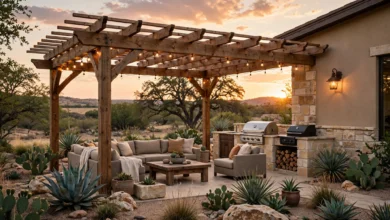
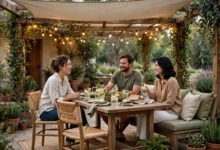
A standard open pergola looks nice but does very little against rain. Look instead for pergolas fitted with retractable waterproof canopies or polycarbonate roof panels, which give you shelter on wet days while still letting light through.
Garden Rooms and Garden Offices
Fully enclosed garden rooms have become one of the most popular additions in Manchester gardens over the last several years, partly driven by remote work but also because they offer a genuinely weatherproof way to use outdoor space year-round. Insulated garden rooms can double as a home office, gym, or simple garden lounge.
Veranda Extensions
A veranda attached directly to the back of the house extends usable space without a full extension, and keeps the area directly outside your back door dry enough to use even during light rain.
2. Solve Drainage Problems Early
Standing water is one of the most common complaints in Manchester gardens, and it’s much easier to fix before you’ve laid a patio than after.
- Install a French drain along the lowest edge of the garden to redirect water away from seating areas.
- Choose permeable paving, like resin-bound gravel or specially designed permeable pavers, which let water drain through rather than pool on the surface.
- Grade the ground slightly away from the house and any patio areas to prevent water collecting near foundations.
- Add a soakaway if your garden regularly holds standing water after heavy rain.
Getting drainage right protects both your outdoor structures and your home’s foundation, which matters a lot given how much rain the region gets.
3. Choose the Right Patio and Flooring Materials
Not every paving material handles Manchester’s freeze-thaw cycles and near-constant damp equally well.
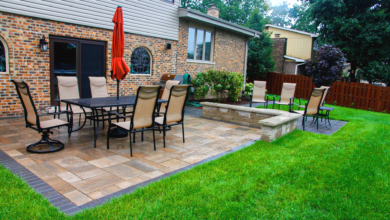
- Porcelain paving has become a popular choice locally because it’s non-porous, resists moss and algae far better than natural stone, and doesn’t crack easily in cold snaps.
- Natural stone, like sandstone or limestone, looks beautiful but needs regular sealing to prevent water absorption and moss growth in Manchester’s damp climate.
- Avoid unsealed timber decking near ground level, since constant moisture speeds up rot, unless you commit to yearly treatment and maintenance.
4. Add Outdoor Heating
Even with shelter from rain, Manchester evenings cool down quickly, so heating extends how long you can comfortably stay outside.
- Wall-mounted infrared heaters work well under a covered pergola or veranda and heat people directly rather than the surrounding air.
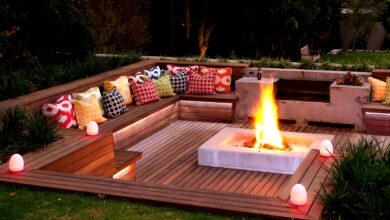
- Fire pits add both warmth and atmosphere, and work particularly well in gardens with a sheltered, semi-covered seating zone nearby.
- Freestanding gas patio heaters offer flexibility for larger open spaces but are less efficient in windy or exposed gardens.
5. Design With Year-Round Planting in Mind
A garden that only looks good in July isn’t much use in a city where summer is short and unpredictable. Building a planting plan around year-round interest makes a much bigger difference in Manchester than in sunnier climates.
- Evergreen shrubs like box, holly, and pittosporum keep structure and colour through winter months.
- Ornamental grasses add movement and texture and generally handle wet, heavy clay soils, common across Greater Manchester, better than many flowering perennials.
- Winter-flowering plants, such as hellebores and winter jasmine, keep some colour going through the greyer months.
- Choose plants suited to heavier clay soil, which is common across much of the region, rather than varieties that need fast-draining, sandy conditions.
The Royal Horticultural Society offers a detailed guide to plants for clay soil that’s a useful reference for gardeners working with typical Manchester ground conditions.
6. Make Small Gardens Work Harder
Many Manchester homes, especially terraced and semi-detached properties, have compact garden spaces. A few ways to maximise them:
- Use vertical planting, like wall-mounted planters or trellising, to add greenery without eating into floor space.
- Choose multi-functional furniture, such as storage benches, to reduce clutter in small areas.
- Add mirrors or light-coloured fencing to help a small, shaded garden feel brighter, which matters given the region’s lower average light levels.
- Zone the space clearly, even in a small footprint, separating a dining area from a lounge or planting area with different flooring or a low divider.
7. Add Lighting Built for Damp Conditions
Good lighting stretches usable hours into the evening, which matters given how early it gets dark for much of the year in northern England.
- Choose fittings rated at least IP44 for general outdoor use, and IP65 or higher for anything exposed to direct rain.
- Layer lighting with a mix of path lights, string lighting under a covered area, and spotlights on key planting for a more finished look.
- LED options cut down on energy use and hold up well to Manchester’s damp, cooler conditions compared to older bulb types.
8. Consider a Rain-Friendly Water Feature
It might sound counterintuitive to add more water to a garden that already gets plenty of rain, but a well-placed water feature can actually make wet weather feel more intentional rather than like an inconvenience.
- A small rill or reflecting pool adds a calm, modern focal point and works particularly well paired with porcelain paving.
- Rain chains, used in place of standard downpipes, turn rainwater runoff into a visual feature rather than something to hide.
- Water features with recirculating pumps stay interesting even during dry spells, so the garden doesn’t rely entirely on rainfall for its visual appeal.
Conclusion
Designing an outdoor space for a Manchester home comes down to working with the local climate instead of copying garden trends built for sunnier places. Start with shelter, since covered seating or a garden room does more for year-round usability than almost any other single addition, then get drainage and flooring sorted so the space doesn’t turn to mud after a wet week. Layer in heating, plants suited to heavier clay soil, and lighting rated for damp conditions, and even a small terraced garden can become a space you actually use through most of the year, not just the handful of sunny weekends Manchester tends to get each summer.
Keywords: